Slide 1 of 1 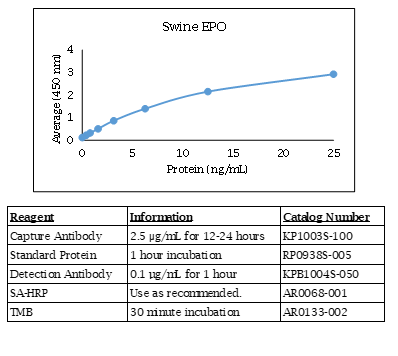
Swine Erythropoietin (EPO) Polyclonal Antibody
- Catalog Number:
- KP1003S
- Availability:
- In stock
- Application:
- ELISA, ELISpot, Flow Cytometry, Neutralization, Western Blot
- Host:
- Rabbit
- 100% Homology:
- Sus scrofa (pig)
- Label:
- Unconjugated
 Powered by Bioz
 - The Swine Erythropoietin (EPO) polyclonal antibody is unlabeled and has been qualified for use in ELISA and Western blot applications. It is the capture antibody in the Kingfisher Biotech Swine Erythropoietin ELISA. The Swine Erythropoietin antibody was produced in rabbits and is antigen-affinity purified. The reactivity by species is: (Canine EPO - Weak) (Equine EPO - Moderate) (Swine EPO - Strong). For research use only.
| Storage Conditions | 2°C to 8°C |
| Purification | Antigen-affinity |
| Country Of Origin | USA |
Swine Erythropoietin (EPO) is a glycoprotein hormone belonging to the type I cytokine family that regulates erythropoiesis, the production of red blood cells. In pigs (Sus scrofa), erythropoietin is produced primarily by peritubular interstitial cells in the kidney, with additional production occurring in the liver, in response to hypoxia or reduced oxygen-carrying capacity of the blood. Swine EPO binds to the erythropoietin receptor (EPOR) on erythroid progenitor cells in the bone marrow, activating intracellular signaling pathways such as JAK2–STAT5, PI3K–AKT, and MAPK, which promote the survival, proliferation, and differentiation of erythroid precursor cells into mature red blood cells. In swine physiology, erythropoietin is essential for maintaining normal hematocrit levels and adequate oxygen delivery to tissues, particularly during growth, physiological stress, or blood loss. Because pigs share significant anatomical, physiological, and hematological similarities with humans, they are widely used as translational animal models for studying anemia, kidney disease, and hypoxia-related disorders, and swine models have been used to investigate EPO regulation and erythropoiesis in conditions such as renal anemia and critical illness, providing insights relevant to human hematology and therapeutic EPO use.
Citations
Please choose a size to see price
RELATED MEDIA

