Slide 1 of 1 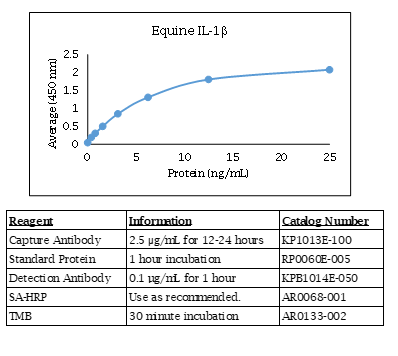
Equine IL-1 beta Polyclonal Antibody
- Catalog Number:
- KP1013E
- Availability:
- In stock
- Application:
- ELISA, ELISpot, Flow Cytometry, Neutralization, Western Blot
- Host:
- Rabbit
- 100% Homology:
- Equus asinus (ass), Equus caballus (horse)
- Label:
- Unconjugated
 Powered by Bioz
 - The Equine IL-1 beta polyclonal antibody is unlabeled and has been qualified for use in ELISA and Western blot applications. It is the capture antibody in the Kingfisher Biotech Equine IL-1 beta ELISA. The Equine IL-1 beta antibody was produced in rabbits and is antigen-affinity purified. The reactivity by species is: (Bovine IL-1beta - None) (Canine IL-1beta - None) (Dolphin IL-1beta - None) (Equine IL-1beta - Strong) (Feline IL-1beta - None) (Guinea Pig IL-1beta - None) (Human IL-1beta - None) (Mouse IL-1beta - None) (Ovine IL-1beta - None) (Rabbit IL-1beta - None) (Swine IL-1beta - None) (Turkey IL-1beta - None). For research use only.
| Storage Conditions | 2°C to 8°C |
| Purification | Antigen-affinity |
| Country Of Origin | USA |
Equine Interleukin-1 Beta (IL-1β) is a potent pro-inflammatory cytokine produced primarily by activated macrophages, monocytes, dendritic cells, and synoviocytes in horses (Equus caballus) in response to infection, tissue injury, or inflammatory stimuli. Synthesized as an inactive precursor (pro–IL-1β), it is cleaved into its active form by caspase-1 within the inflammasome complex and signals through the IL-1 receptor (IL-1R1), activating NF-κB and MAPK pathways that promote fever, leukocyte recruitment, endothelial activation, and acute-phase protein production. In equine health, IL-1β plays a central role in inflammatory conditions such as osteoarthritis, laminitis, colitis, endotoxemia, equine asthma (recurrent airway obstruction), and bacterial infections, where excessive IL-1β production contributes to joint degradation, pulmonary inflammation, systemic inflammatory response syndrome (SIRS), and tissue damage. In joint disease specifically, IL-1β drives cartilage matrix degradation and synovial inflammation, making it a key therapeutic target. As both a biomarker and mediator of inflammation, equine IL-1β is widely studied in veterinary medicine and performance horse management. In translational research, horses serve as valuable large-animal models for human osteoarthritis, sepsis, and inflammatory lung disease, and characterization of equine IL-1β supports studies of inflammasome activation, cytokine-driven pathology, and development of targeted anti-inflammatory and regenerative therapies relevant to both equine and human health.
Citations
Please choose a size to see price
RELATED MEDIA

