Slide 1 of 1 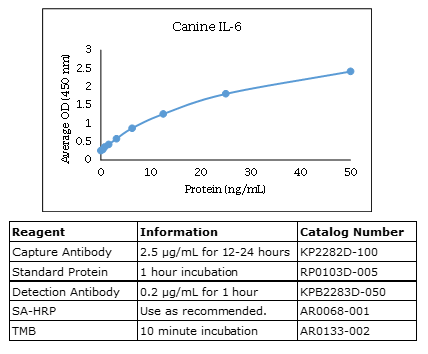
Canine IL-6 Polyclonal Antibody
- Catalog Number:
- KP2282D
- Availability:
- In stock
- Application:
- ELISA, ELISpot, Flow Cytometry, Neutralization, Western Blot
- Host:
- Rabbit
- 100% Homology:
- Canis lupus dingo (dingo), Canis lupus familiaris (dog)
- Label:
- Unconjugated
 Powered by Bioz
 - The Canine IL-6 polyclonal antibody is unlabeled and has been qualified for use in ELISA and Western blot applications. It is the capture antibody in the Kingfisher Biotech Canine IL-6 ELISA. The Canine IL-6 antibody was produced in rabbits and is antigen-affinity purified. This antibody has shown minimal or no cross-reactivity with atlantic salmon, bat, bovine, caprine, chicken, cynomolgus monkey, dolphin, equine, feline, ferret, guinea pig, human, mouse, ovine, rabbit, rat, swine, or zebrafish IL-6 proteins. For research use only.
| Storage Conditions | 2°C to 8°C |
| Purification | Antigen-affinity |
| Country Of Origin | USA |
Canine Interleukin-6 (IL-6) is a multifunctional pro-inflammatory cytokine and a central member of the IL-6 cytokine family—including IL-6, IL-11, IL-27, IL-31, leukemia inhibitory factor (LIF), oncostatin M (OSM), ciliary neurotrophic factor (CNTF), cardiotrophin-1 (CT-1), and cardiotrophin-like cytokine factor 1 (CLCF1)—all of which signal through receptor complexes utilizing the shared gp130 subunit to activate JAK/STAT and MAPK pathways. In dogs (Canis lupus familiaris), IL-6 regulates acute-phase protein production (such as C-reactive protein and serum amyloid A), B- and T-cell differentiation, hematopoiesis, and systemic inflammatory responses. Elevated IL-6 levels are associated with infectious diseases including canine parvovirus, distemper, and sepsis, as well as chronic inflammatory and immune-mediated disorders, osteoarthritis, and neoplasia. Importantly, several naturally occurring canine diseases serve as translational models for human conditions in which IL-6 plays a pathogenic role, including canine osteosarcoma (model for pediatric osteosarcoma), lymphoma (model for non-Hodgkin lymphoma), melanoma, atopic dermatitis (model for allergic skin disease), inflammatory bowel disease (model for human IBD), rheumatoid-like immune-mediated polyarthritis, and dilated cardiomyopathy. Dysregulated IL-6 signaling in these conditions contributes to inflammation, tumor progression, and systemic pathology, making canine IL-6 a critical biomarker and therapeutic target in veterinary medicine and a valuable component of comparative and translational research.
Citations
Please choose a size to see price
RELATED MEDIA

