Slide 1 of 1 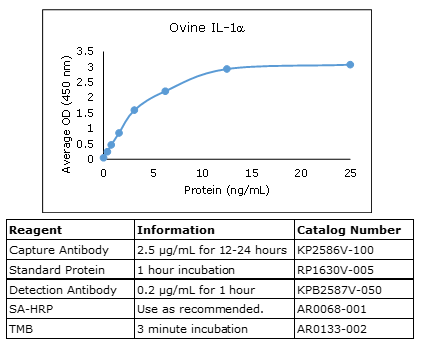
Ovine IL-1 alpha Polyclonal Antibody
- Catalog Number:
- KP2586V
- Availability:
- In stock
- Application:
- ELISA, ELISpot, Flow Cytometry, Neutralization, Western Blot
- Host:
- Rabbit
- 100% Homology:
- Ovis aries (sheep)
- Label:
- Unconjugated
 Powered by Bioz
 - The Ovine IL-1 alpha polyclonal antibody is unlabeled and has been qualified for use in ELISA and Western blot applications. It is the capture antibody in the Kingfisher Biotech Ovine IL-1 alpha ELISA. The Ovine IL-1 alpha antibody was produced in rabbits and is antigen-affinity purified. This antibody has been shown to cross-react strongly with bovine and caprine IL-1 alpha, moderatley with swine IL-1 alpha, and weakly with equine IL-1 alpha. It has not been show to cross-react with canine, cynomolgus monkey, dolphin, ferret, feline, human, mink, mouse, rabbit, or rat IL-1 alpha proteins. For research use only.
| Storage Conditions | 2°C to 8°C |
| Purification | Antigen-affinity |
| Country Of Origin | USA |
Ovine Interleukin-1 Alpha (IL-1α) is a pro-inflammatory cytokine belonging to the IL-1 family—which includes IL-1α, IL-1β, and the IL-1 receptor antagonist (IL-1Ra)—and plays a central role in initiating innate and sterile inflammatory responses in sheep (Ovis aries). IL-1α is constitutively expressed in epithelial and barrier tissues and functions as an intracellular alarmin that is rapidly released upon cell injury, necrosis, microbial invasion, or mechanical stress, triggering early inflammatory signaling independent of inflammasome processing. Upon binding to the IL-1 receptor type 1 (IL-1R1), ovine IL-1α activates NF-κB and MAPK pathways that promote leukocyte recruitment, endothelial activation, fever, and amplification of downstream pro-inflammatory cytokine cascades. In ovine health, IL-1α is particularly relevant in inflammatory conditions such as mastitis, pneumonia, foot rot, enteric infections, parasitic infestations, and viral diseases including ovine progressive pneumonia (maedi-visna), where epithelial and tissue damage drive early IL-1α–mediated immune activation. While essential for pathogen defense and tissue repair, excessive IL-1α signaling can contribute to tissue damage, chronic inflammation, and reduced productivity. As an early mediator of sterile and infectious inflammation, ovine IL-1α serves as a biomarker of tissue injury and innate immune activation. In veterinary and comparative research, characterization of ovine IL-1α supports studies of host–pathogen interactions, inflammatory regulation in small ruminants, and development of targeted IL-1–modulating therapies to improve flock health and disease resilience.
Citations
Please choose a size to see price
RELATED MEDIA

