Slide 1 of 1 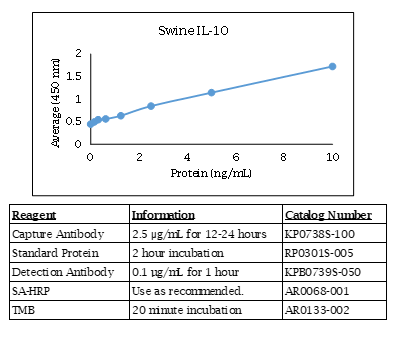
Swine IL-10 Polyclonal Antibody - Biotinylated
- Catalog Number:
- KPB0739S
- Availability:
- In stock
- Application:
- ELISA, ELISpot
- Host:
- Rabbit
- 100% Homology:
- Sus scrofa (pig)
- Label:
- Biotin
 Powered by Bioz
 - The Swine IL-10 polyclonal antibody is labeled and has been qualified for use in ELISA. It is the detection antibody in the Kingfisher Biotech Swine IL-10 ELISA. The Swine IL-10 antibody was produced in rabbits and is antigen-affinity purified. For research use only. Made in the USA.
| Storage Conditions | 2°C to 8°C |
| Purification | Antigen-affinity |
| Country Of Origin | USA |
Swine Interleukin-10 (IL-10) is a key anti-inflammatory cytokine produced by regulatory T cells (Tregs), Th2 cells, macrophages, dendritic cells, and certain B-cell populations in pigs (Sus scrofa domesticus), where it plays a central role in limiting excessive immune activation and maintaining immune homeostasis. IL-10 signals through the IL-10 receptor complex (IL-10R1/IL-10R2), activating JAK/STAT3 pathways that suppress pro-inflammatory cytokine production (including IL-1β, TNF-α, IL-6, and IFN-γ), reduce antigen presentation, and downregulate Th1-type cell-mediated responses. In swine health, IL-10 is critically involved in modulating immune responses during economically significant infections such as porcine reproductive and respiratory syndrome virus (PRRSV), African swine fever virus (ASFV), swine influenza virus, enteric infections, and bacterial pneumonia, where elevated IL-10 can limit tissue damage but may also contribute to immune suppression and viral persistence. The balance between IL-10 and pro-inflammatory cytokines influences disease severity, vaccine responsiveness, and growth performance. As a biomarker of immune regulation, swine IL-10 is widely used in studies of vaccine efficacy, immunopathogenesis, and herd health management. In translational research, pigs serve as valuable large-animal models due to physiological similarities to humans, and characterization of swine IL-10 supports investigations into immune tolerance, chronic infection dynamics, cytokine network regulation, and development of immunomodulatory strategies relevant to both veterinary and human medicine.
Citations
50 ug
Price: $400.00
RELATED MEDIA

