Slide 1 of 1 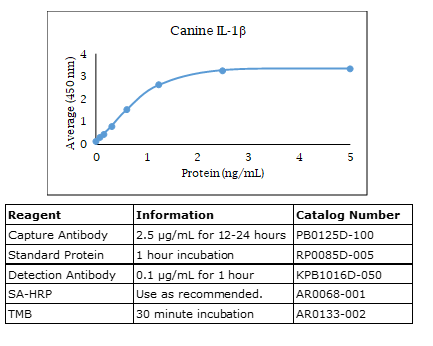
Canine IL-1 beta Polyclonal Antibody - Biotinylated
- Catalog Number:
- KPB1016D
- Availability:
- In stock
- Application:
- ELISA, ELISpot
- Host:
- Rabbit
- 100% Homology:
- Canis lupus dingo (dingo), Canis lupus familiaris (dog)
- Label:
- Biotin
 Powered by Bioz
 - The Canine IL-1 beta polyclonal antibody is labeled and has been qualified for use in ELISA. It is the detection antibody in the Kingfisher Biotech Canine IL-1 beta ELISA. The Canine IL-1 beta antibody was produced in rabbits and is antigen-affinity purified. The reactivity by species is: (Bovine IL-1beta - None) (Canine IL-1beta - Strong) (Dolphin IL-1beta - None) (Equine IL-1beta - None) (Feline IL-1beta - None) (Guinea Pig IL-1beta - None) (Human IL-1beta - None) (Mouse IL-1beta - None) (Ovine IL-1beta - None) (Rabbit IL-1beta - None) (Swine IL-1beta - None) (Turkey IL-1beta - None). For research use only.
| Storage Conditions | 2°C to 8°C |
| Purification | Antigen-affinity |
| Country Of Origin | USA |
Canine Interleukin-1 Beta (IL-1β) is a potent pro-inflammatory cytokine produced primarily by activated macrophages, monocytes, and dendritic cells in dogs (Canis lupus familiaris) following recognition of pathogens or tissue damage. Synthesized as an inactive precursor (pro–IL-1β), it is cleaved into its active form by caspase-1 within the inflammasome complex and subsequently binds to the IL-1 receptor (IL-1R1), activating NF-κB and MAPK signaling pathways that drive fever, leukocyte recruitment, endothelial activation, and acute-phase protein production. In canine health, IL-1β plays a central role in inflammatory and infectious conditions including bacterial pneumonia, pyometra, parvoviral enteritis, osteoarthritis, immune-mediated diseases, and sepsis, where excessive or sustained IL-1β production can contribute to tissue damage and systemic inflammation. Elevated IL-1β levels are also associated with chronic inflammatory disorders and certain cancers, reflecting its role in shaping the tumor microenvironment. As both a biomarker and therapeutic target, canine IL-1β is important in veterinary medicine for monitoring inflammatory status and evaluating anti-inflammatory interventions. In translational research, dogs serve as valuable spontaneous models for human osteoarthritis, inflammatory bowel disease, sepsis, and cancer, and characterization of canine IL-1β supports studies of inflammasome activation, cytokine-driven pathology, and development of targeted immunomodulatory therapies relevant to both canine and human health.
Citations
50 ug
Price: $400.00
RELATED MEDIA

