Slide 1 of 1 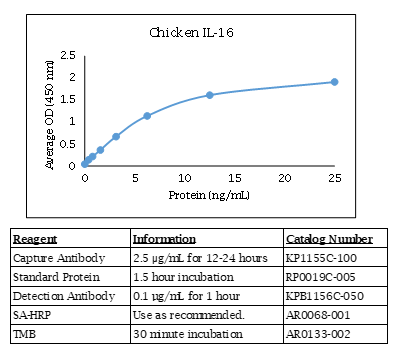
Chicken IL-16 Polyclonal Antibody - Biotinylated
- Catalog Number:
- KPB1156C
- Availability:
- In stock
- Application:
- ELISA, ELISpot
- Host:
- Rabbit
- 100% Homology:
- Gallus gallus (chicken)
- Label:
- Biotin
 Powered by Bioz
 - The Chicken IL-16 polyclonal antibody is labeled and has been qualified for use in ELISA. It is the detection antibody in the Kingfisher Biotech Chicken IL-16 ELISA. The Chicken IL-16 antibody was produced in rabbits and is antigen-affinity purified. The reactivity by species is: (Bovine IL-16 - None) (Chicken IL-16 - Strong). For research use only.
| Storage Conditions | 2°C to 8°C |
| Purification | Antigen-affinity |
| Country Of Origin | USA |
Chicken Interleukin-16 (IL-16) is a proinflammatory cytokine that plays an important role in regulating immune cell recruitment and activation in chickens (Gallus gallus). IL-16 is produced by several cell types, including T lymphocytes, epithelial cells, and other immune cells, in response to immune stimulation or inflammatory signals. Chicken IL-16 functions primarily as a chemoattractant for CD4⁺ immune cells by interacting with the CD4 receptor, promoting migration and activation of T helper cells, monocytes, and dendritic-like cells to sites of infection or inflammation. Through these actions, IL-16 contributes to coordination of cellular immune responses and regulation of inflammatory signaling pathways. In chickens, IL-16 participates in immune responses against viral, bacterial, and parasitic pathogens and may influence inflammatory processes in tissues such as the respiratory and gastrointestinal tracts. In cell culture, recombinant chicken IL-16 is used to study chemotactic responses of CD4⁺ immune cells, investigate mechanisms of immune cell recruitment and activation, and evaluate cytokine-mediated regulation of inflammatory pathways. Due to these functions, chicken IL-16 is studied in avian immunology and translational research, including investigations of host–pathogen interactions, vaccine responses, and immune regulation relevant to poultry health and disease resistance.
Citations
50 ug
Price: $400.00
RELATED MEDIA
