Slide 1 of 1 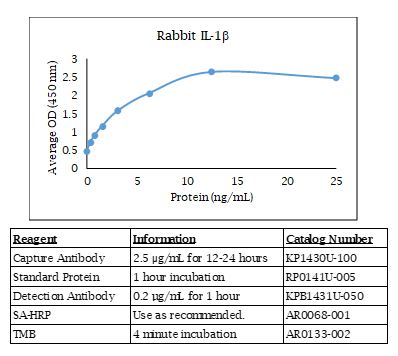
Rabbit IL-1 beta Polyclonal Antibody - Biotinylated
- Catalog Number:
- KPB1431U
- Availability:
- In stock
- Application:
- ELISA, ELISpot
- Host:
- Chicken
- 100% Homology:
- Oryctolagus cuniculus (rabbit)
- Label:
- Biotin
 Powered by Bioz
 - The Rabbit IL-1 beta polyclonal antibody is labeled and has been qualified for use in ELISA. It is the detection antibody in the Kingfisher Biotech Rabbit IL-1 beta ELISA. The Rabbit IL-1 beta antibody was produced in chickens and is antigen-affinity purified. The reactivity by species is: (Bovine IL-1beta - None) (Canine IL-1beta - None) (Caprine IL-1beta - None) (Cynomolgus Monkey IL-1beta - None) (Dolphin IL-1beta - None) (Equine IL-1beta - None) (Feline IL-1beta - None) (Ferret IL-1beta - None) (Guinea Pig IL-1beta - None) (Human IL-1beta - None) (Mouse IL-1beta - None) (Ovine IL-1beta - None) (Rabbit IL-1beta - Strong) (Swine IL-1beta - None) (Turkey IL-1beta - None). For research use only.
| Storage Conditions | 2°C to 8°C |
| Purification | Antigen-affinity |
| Country Of Origin | USA |
Rabbit Interleukin-1 Beta (IL-1β) is a potent pro-inflammatory cytokine produced primarily by activated macrophages, monocytes, and dendritic cells in rabbits (Oryctolagus cuniculus) in response to infection, tissue injury, or inflammatory stimuli. Synthesized as an inactive precursor (pro–IL-1β), it is processed into its active form by caspase-1 within inflammasome complexes—most notably the NLRP3 inflammasome—and subsequently signals through the IL-1 receptor type 1 (IL-1R1), activating NF-κB and MAPK pathways that drive fever, leukocyte recruitment, endothelial activation, and amplification of inflammatory responses. In rabbit health, IL-1β is elevated during bacterial infections such as Pasteurella multocida, viral diseases including rabbit hemorrhagic disease virus (RHDV) and myxoma virus, and inflammatory conditions affecting the respiratory tract, joints, and gastrointestinal system. Excessive IL-1β production can contribute to systemic inflammation and tissue pathology. In research settings, rabbits serve as important models for atherosclerosis, osteoarthritis, ophthalmic inflammation, and infectious disease, and characterization of rabbit IL-1β supports studies of inflammasome activation, cytokine-mediated tissue injury, and evaluation of anti-inflammatory and immunomodulatory therapies relevant to both veterinary medicine and human inflammatory disease research.
Citations
50 ug
Price: $400.00
RELATED MEDIA
