Slide 1 of 1 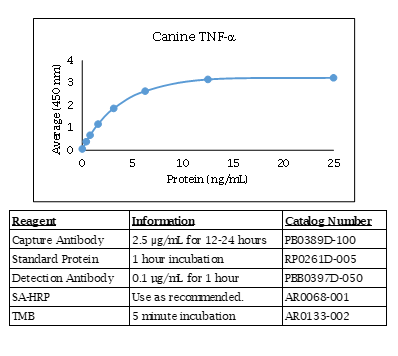
Canine TNF alpha Polyclonal Antibody
- Catalog Number:
- PB0389D
- Availability:
- In stock
- Application:
- ELISA, ELISpot, Flow Cytometry, Neutralization, Western Blot
- Host:
- Goat
- 100% Homology:
- Canis lupus dingo (dingo), Canis lupus familiaris (dog), Nyctereutes procyonoides (raccoon dog)
- Label:
- Unconjugated
 Powered by Bioz
 - The Canine TNF alpha polyclonal antibody is unlabeled and has been qualified for use in ELISA and Western blot applications. It is the capture antibody in the Kingfisher Biotech Canine TNF alpha ELISA. The Canine TNF alpha polyclonal antibody was produced in goats and is antigen-affinity purified. The reactivity by species is: (Bovine TNFalpha - None) (Canine TNFalpha - Strong) (Caprine TNFalpha - None) (Cynomolgus Monkey TNFalpha - Strong) (Dolphin TNFalpha - None) (Equine TNFalpha - Weak) (Feline TNFalpha - Moderate) (Guinea Pig TNFalpha - None) (Human TNFalpha - Strong) (Mouse TNFalpha - None) (Ovine TNFalpha - None) (Rabbit TNFalpha - Moderate) (Swine TNFalpha - None). For research use only.
| Storage Conditions | 2°C to 8°C |
| Purification | Antigen-affinity |
| Country Of Origin | USA |
Canine Tumor Necrosis Factor Alpha (TNF-α) (also known as TNF or cachectin) is a proinflammatory cytokine that plays a central role in innate immune responses, inflammation, and host defense against pathogens in dogs (Canis lupus familiaris). TNF-α is a member of the tumor necrosis factor (TNF) superfamily, which includes related cytokines such as TNF-β (lymphotoxin-α), Fas ligand (FasL), CD40 ligand (CD40L), and TRAIL, proteins that regulate immune signaling, apoptosis, and inflammatory pathways. In dogs, TNF-α is primarily produced by activated macrophages, monocytes, dendritic cells, and T lymphocytes in response to infection, tissue injury, or inflammatory stimuli. TNF-α exerts its biological effects by binding to TNF receptors TNFR1 (p55) and TNFR2 (p75), activating intracellular signaling pathways including NF-κB, MAPK, and caspase-mediated pathways, which regulate cytokine production, immune cell activation, apoptosis, and inflammatory responses. In canine health, TNF-α is involved in immune responses to bacterial infections, viral diseases, and inflammatory conditions, including canine parvovirus infection, leishmaniasis, and chronic inflammatory disorders such as inflammatory bowel disease (IBD). Elevated TNF-α levels are also associated with sepsis, autoimmune diseases, and cancer-related inflammation, where dysregulated TNF signaling can contribute to tissue damage and disease progression. Because TNF-α is a key mediator of inflammation and immune regulation, canine TNF-α is widely studied in veterinary immunology, infectious disease research, and inflammatory disease models, contributing to improved understanding of immune responses and potential therapeutic strategies in dogs.
Citations
Please choose a size to see price
RELATED MEDIA

