Slide 1 of 1 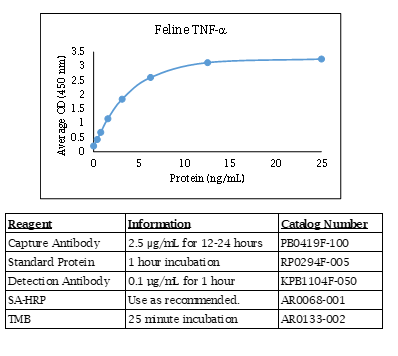
Feline TNF alpha Polyclonal Antibody
- Catalog Number:
- PB0419F
- Availability:
- In stock
- Application:
- ELISA, ELISpot, Flow Cytometry, Neutralization, Western Blot
- Host:
- Rabbit
- 100% Homology:
- Felis catus (domestic cat), Prionailurus bengalensis (leopard cat), Prionailurus viverrinus (fishing cat)
- Label:
- Unconjugated
 Powered by Bioz
 - Anti-feline TNF-α polyclonal antibody (catalog PB0419F) is made in rabbits, affinity-purified by feline TNF-α affinity chromatography and supplied in PBS containing 0.09% NaN₃; it was raised against recombinant feline TNF-α (immunogen) and the calculated molecular weight of feline TNF-α is ~17.2 kDa. Store at 2-8°C (stable up to 12 months from date of receipt). Recommended working concentrations are Western blot 0.1-2 µg/mL and ELISA 1-5 µg/mL (optimize per assay); typical sandwich ELISA reagent pairings and suggested conditions are provided on the datasheet (capture antibody PB0419F; standard protein RP0294F-005; detection antibody KPB1104F; streptavidin-HRP AR0068-001; TMB substrate AR0133-002). In cross-reactivity testing (ELISA) this antibody shows no reactivity to bovine or dolphin TNF-α; strong reactivity to canine and cynomolgus monkey TNF-α; moderate reactivity to human TNF-α; and weak reactivity to caprine, equine and swine TNF-α. It is commonly used for ELISA, ELISpot, flow cytometry, neutralization, and Western blot applications (users should validate and optimize conditions for each application). The product is made in the USA, supplied for research applications only, and is not intended for medicinal, diagnostic, or therapeutic use.
| Storage Conditions | 2°C to 8°C |
| Purification | Antigen-affinity |
| Country Of Origin | USA |
Feline Tumor Necrosis Factor Alpha (TNF-α) (also known as TNF or cachectin) is a proinflammatory cytokine that plays a central role in innate immune responses, inflammation, and host defense against pathogens in cats (Felis catus). TNF-α is a member of the tumor necrosis factor (TNF) superfamily, which includes related cytokines such as TNF-β (lymphotoxin-α), Fas ligand (FasL), CD40 ligand (CD40L), and TRAIL, molecules that regulate immune signaling, apoptosis, and inflammatory processes. In cats, TNF-α is primarily produced by activated macrophages, monocytes, dendritic cells, and T lymphocytes in response to infection, tissue injury, or inflammatory stimuli. TNF-α exerts its biological effects by binding to TNF receptors TNFR1 (p55) and TNFR2 (p75), activating intracellular signaling pathways including NF-κB, MAPK, and caspase-mediated pathways, which regulate cytokine production, immune cell activation, apoptosis, and inflammatory responses. In feline health, TNF-α is involved in immune responses to viral infections such as feline immunodeficiency virus (FIV) and feline leukemia virus (FeLV), as well as bacterial infections, inflammatory diseases, and cancer. Dysregulated TNF-α production can contribute to chronic inflammation and tissue damage, making it an important mediator of inflammatory pathology. Because TNF-α plays a key role in immune regulation and inflammatory disease, feline TNF-α is studied in veterinary immunology, infectious disease research, and inflammatory disorder models, helping to improve understanding of immune responses and disease mechanisms in cats.
Citations
Please choose a size to see price
RELATED MEDIA

