Slide 1 of 1 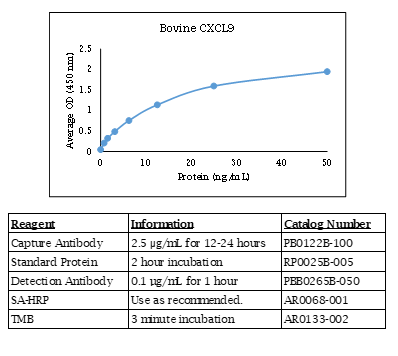
Bovine CXCL9 (MIG) Polyclonal Antibody - Biotinylated
- Catalog Number:
- PBB0265B
- Availability:
- In stock
- Application:
- ELISA, ELISpot
- Host:
- Rabbit
- 100% Homology:
- Bison bison bison (American buffalo), Bos grunniens (domestic yak), Bos indicus (zebu), Bos mutus (wild yak), Bos taurus (cattle)
- Label:
- Biotin
 Powered by Bioz
 - The Bovine CXCL9 (MIG) polyclonal antibody is labeled and has been qualified for use in ELISA. It is the detection antibody in the Kingfisher Biotech Bovine CXCL9 ELISA. The Bovine CXCL9 polyclonal antibody was produced in rabbits and is antigen-affinity purified. For research use only.
| Storage Conditions | 2°C to 8°C |
| Purification | Antigen-affinity |
| Country Of Origin | USA |
Bovine CXCL9 (C-X-C motif chemokine ligand 9), also known as MIG (monokine induced by interferon-γ), is a proinflammatory chemokine belonging to the CXC chemokine family, which also includes CXCL10 (IP-10) and CXCL11 (I-TAC) that regulate T-cell recruitment during interferon-driven immune responses. In cattle (Bos taurus), CXCL9 is produced by macrophages, dendritic cells, endothelial cells, and epithelial cells in response to interferon-γ (IFN-γ) and other inflammatory stimuli during infection or immune activation. CXCL9 signals primarily through the chemokine receptor CXCR3, expressed on activated T lymphocytes, natural killer (NK) cells, and other immune cells, promoting chemotaxis and accumulation of these cells at sites of infection or inflammation. In bovine health, CXCL9 contributes to cell-mediated immune responses against intracellular pathogens, including those responsible for diseases such as bovine tuberculosis caused by Mycobacterium bovis, where CXCL9 helps recruit Th1-type T cells and NK cells to infected tissues. Because of its role in interferon-regulated immune responses and T-cell trafficking, bovine CXCL9 is studied in veterinary immunology, infectious disease research, and vaccine development, particularly in investigations of host immune responses to mycobacterial infections and other intracellular pathogens in cattle.
Citations
50 ug
Price: $400.00
RELATED MEDIA

