Slide 1 of 1 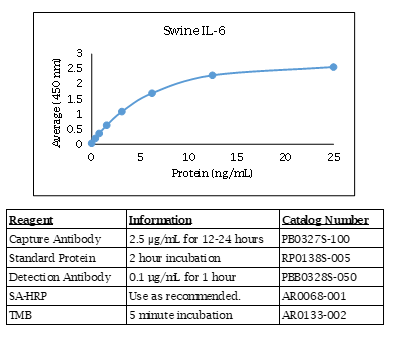
Swine IL-6 Polyclonal Antibody - Biotinylated
- Catalog Number:
- PBB0328S
- Availability:
- In stock
- Application:
- ELISA, ELISpot
- Host:
- Rabbit
- 100% Homology:
- Sus scrofa (pig)
- Label:
- Biotin
 Powered by Bioz
 - The Swine IL-6 polyclonal antibody is labeled and has been qualified for use in ELISA. It is the detection antibody in the Kingfisher Biotech Swine IL-6 ELISA. The Swine IL-6 polyclonal antibody was produced in rabbits and is antigen-affinity purified. The reactivity by species is: (Bovine IL-6 - None) (Canine IL-6 - None) (Chicken IL-6 - None) (Cynomolgus Monkey IL-6 - None) (Equine IL-6 - None) (Feline IL-6 - Weak) (Human IL-6 - None) (Mouse IL-6 - None) (Ovine IL-6 - None) (Swine IL-6 - Strong). For research use only.
| Storage Conditions | 2°C to 8°C |
| Purification | Antigen-affinity |
| Country Of Origin | USA |
Swine Interleukin-6 (IL-6) is a multifunctional pro-inflammatory cytokine and a central member of the IL-6 cytokine family—including IL-6, IL-11, IL-27, IL-31, leukemia inhibitory factor (LIF), oncostatin M (OSM), ciliary neurotrophic factor (CNTF), cardiotrophin-1 (CT-1), and cardiotrophin-like cytokine factor 1 (CLCF1)—which signal through receptor complexes containing the shared gp130 subunit to activate JAK/STAT and MAPK pathways. In pigs (Sus scrofa domesticus), IL-6 is rapidly produced by macrophages, monocytes, endothelial cells, and epithelial cells in response to infection, tissue injury, and stress, where it regulates acute-phase protein synthesis (including C-reactive protein, haptoglobin, and serum amyloid A), fever, leukocyte activation, and B- and T-cell differentiation. Elevated IL-6 levels are associated with economically significant diseases such as porcine reproductive and respiratory syndrome (PRRS), swine influenza, African swine fever, bacterial sepsis, enteric infections, and post-weaning multisystemic wasting syndrome, where dysregulated IL-6 responses can contribute to systemic inflammation and reduced growth performance. As both a biomarker of immune activation and a mediator of disease severity, swine IL-6 is widely used in herd health monitoring, vaccine evaluation, and immunopathogenesis studies. In translational research, pigs serve as valuable large-animal models due to physiological and immunological similarities to humans, and characterization of swine IL-6 and related family members supports studies in infectious disease, sepsis, trauma, metabolic disorders, and immunomodulatory therapeutic development.
Citations
50 ug
Price: $400.00
RELATED MEDIA

