Slide 1 of 1 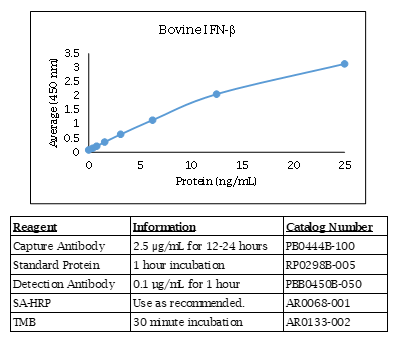
Bovine IFN beta Polyclonal Antibody - Biotinylated
- Catalog Number:
- PBB0450B
- Availability:
- In stock
- Application:
- ELISA, ELISpot
- Host:
- Goat
- 100% Homology:
- Bos taurus (cattle)
- Label:
- Biotin
 Powered by Bioz
 - The Bovine IFN beta polyclonal antibody is labeled and has been qualified for use in ELISA. It is the detection antibody in the Kingfisher Biotech Bovine IFN beta ELISA. The Bovine IFN beta polyclonal antibody was produced in goats and is antigen-affinity purified. The reactivity by species is: (Bovine IFN beta - Strong) (Equine IFN beta - Weak) (Mouse IFN beta - Weak) (Swine IFN beta - None). For research use only.
| Storage Conditions | 2°C to 8°C |
| Purification | Antigen-affinity |
| Country Of Origin | USA |
Bovine Interferon-Beta (IFN-β) is a type I interferon produced primarily by virus-infected epithelial cells, fibroblasts, macrophages, and dendritic cells in cattle (Bos taurus), where it serves as a key early mediator of innate antiviral immunity. Following recognition of viral nucleic acids by pattern recognition receptors such as RIG-I–like receptors and the cGAS-STING pathway, bovine IFN-β is rapidly induced and signals through the type I interferon receptor complex (IFNAR1/IFNAR2), activating JAK/STAT pathways and driving expression of interferon-stimulated genes (ISGs) that inhibit viral replication, enhance antigen presentation, and promote natural killer (NK) cell and adaptive immune activation. IFN-β plays an important role in host defense against economically significant bovine viral pathogens including bovine viral diarrhea virus (BVDV), bovine herpesvirus-1 (IBR), bovine respiratory syncytial virus (BRSV), foot-and-mouth disease virus (FMDV), and other agents involved in the bovine respiratory disease (BRD) complex. Many of these viruses possess immune evasion strategies that suppress or delay IFN-β production, contributing to viral persistence and disease severity. As both a biomarker and functional mediator of antiviral responses, bovine IFN-β is central to vaccine evaluation, antiviral research, and studies of host–virus interactions in cattle, while also supporting comparative research into type I interferon biology in large-animal models relevant to human infectious disease.
Citations
50 ug
Price: $400.00
RELATED MEDIA
