Slide 1 of 1 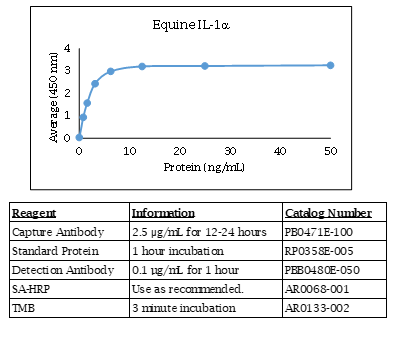
Equine IL-1 alpha Polyclonal Antibody - Biotinylated
- Catalog Number:
- PBB0480E
- Availability:
- In stock
- Application:
- ELISA, ELISpot
- Host:
- Goat
- 100% Homology:
- Equus caballus (horse)
- Label:
- Biotin
 Powered by Bioz
 - The Equine IL-1 alpha polyclonal antibody is labeled and has been qualified for use in ELISA. It is the detection antibody in the Kingfisher Biotech Equine IL-1 alpha ELISA. The Equine IL-1 alpha polyclonal antibody was produced in goats and is antigen-affinity purified. For research use only. Made in the USA.
| Storage Conditions | 2°C to 8°C |
| Purification | Antigen-affinity |
| Country Of Origin | USA |
Equine Interleukin-1 Alpha (IL-1α) is a pro-inflammatory cytokine belonging to the IL-1 family—which includes IL-1α, IL-1β, and the IL-1 receptor antagonist (IL-1Ra)—and plays a pivotal role in initiating innate immune responses in horses (Equus caballus). IL-1α is constitutively expressed in epithelial and barrier tissues and acts as an intracellular alarmin that is rapidly released upon cell injury, necrosis, or mechanical stress, triggering early inflammatory signaling. Upon binding to the IL-1 receptor type 1 (IL-1R1), IL-1α activates NF-κB and MAPK pathways that promote leukocyte recruitment, endothelial activation, fever, and amplification of pro-inflammatory cytokine cascades. In equine health, IL-1α is particularly important in musculoskeletal inflammation such as osteoarthritis and synovitis, where it contributes to cartilage matrix degradation and synovial inflammation, as well as in laminitis, colitis, endotoxemia, and respiratory inflammatory conditions. While critical for initiating protective immune responses and tissue repair, excessive or sustained IL-1α signaling can exacerbate tissue damage and systemic inflammatory responses. As an early mediator of sterile and infectious inflammation, equine IL-1α serves as a biomarker of tissue injury and innate immune activation. In veterinary and translational research, characterization of equine IL-1α supports studies of joint disease pathogenesis, systemic inflammatory response syndrome (SIRS), cytokine regulation, and development of targeted anti-inflammatory and regenerative therapies relevant to both equine and human inflammatory diseases.
Citations
50 ug
Price: $400.00
RELATED MEDIA

