Slide 1 of 1 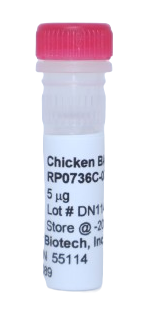
Chicken BAFF Recombinant Protein
- Catalog Number:
- RP0736C
- Availability:
- In stock
- Application:
- Cell Culture, Control, ELISA, ELISpot Control, Western Blot Control
- 100% Homology:
- Gallus gallus (chicken)
 Powered by Bioz
 - Chicken BAFF (TNFSF13B) (catalog RP0736C) is a yeast-derived cytokine supplied lyophilized without carrier protein in 10% trehalose; it has no affinity tags and is naturally endotoxin-free, and should be reconstituted in sterile PBS that contains at least 0.1% carrier protein. The protein is ~17.0 kDa, 152 amino acids long (full sequence provided), and >98% pure by SDS-PAGE, with 100% amino-acid homology to chicken. Store at -20°C (stable up to twelve months from date of receipt; working aliquots with carrier protein stable ~3 months) and avoid repeated freeze/thaw cycles. Product origin is the USA. It is commonly used to study BAFF/TNFSF13B signaling and B-cell biology (including survival, maturation, and antibody production); typical experimental uses include cell-culture stimulation and dosing studies, proliferation and survival assays, ELISA and neutralization assays, flow-cytometry and Western blot controls, and antibody generation/validation. Kingfisher Biotech products are supplied for research applications and are not intended for medicinal, diagnostic, or therapeutic use.
| Amino Acid Sequence | SIVNAEETVL QACLQLIADS KSDIQQKDDS SIVPWLLSFK RGTALEEQGN KIVIKETGYF FIYGQVLYTD TTFAMGHLIQ RKKAHVFGDD LSLVTLFRCI QNMPQSYPNN SCYTAGIAKL EEGDELQLTI PRRRAKISLD GDGTFFGAVR LL (152) |
| Endotoxin | Naturally endotoxin-free |
| Form | Lyophilized |
| Storage Conditions | -20°C |
| Molecular Weight | 17.0 kDa |
| Purity | >98% as visualized by SDS-PAGE analysis. |
| Expression System | Yeast |
| Form | Lyophilized |
| Country Of Origin | USA |
Chicken BAFF (B cell–Activating Factor), also known as BLyS or TNFSF13B, is a member of the tumor necrosis factor (TNF) superfamily and plays an important role in B cell development, survival, and regulation of humoral immunity in chickens (Gallus gallus). BAFF is produced primarily by monocytes, macrophages, dendritic cells, and stromal cells within primary and secondary lymphoid tissues, including the bursa of Fabricius, spleen, and cecal tonsils. Through interaction with its receptors—avian homologs of BAFF-R, TACI, and BCMA—chicken BAFF promotes B cell maturation, immunoglobulin production, and maintenance of antibody-secreting plasma cells. In avian species, BAFF is particularly important for bursal B cell development and mucosal antibody responses, including IgY and IgA production. Dysregulated BAFF expression may be associated with chronic inflammation, viral infections such as infectious bursal disease virus (IBDV) and Marek’s disease virus (MDV), or lymphoid proliferative disorders. In poultry science and comparative immunology research, chicken BAFF is studied in the context of vaccine responses, resistance to enteric and respiratory pathogens, immune system development, and strategies to enhance humoral immunity in commercial poultry production.
Citations
Please choose a size to see price
RELATED MEDIA
