Slide 1 of 1 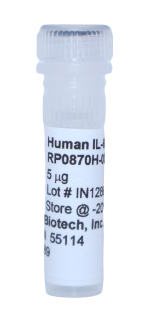
Human IL-6 Recombinant Protein
- Catalog Number:
- RP0870H
- Availability:
- In stock
- Application:
- Cell Culture, Control, ELISA, ELISpot Control, Western Blot Control
- 100% Homology:
- Homo sapiens (human), Pan paniscus (pygmy chimpanzee), Pan troglodytes (chimpanzee), Pongo abelii (Sumatran orangutan)
 Powered by Bioz
 - Human IL-6 (catalog RP0870H) is a yeast-derived cytokine supplied lyophilized without carrier protein in 10% trehalose; it has no affinity tags and is naturally endotoxin-free, and should be reconstituted in sterile PBS that contains at least 0.1% carrier protein. The protein is ~20.8 kDa, 183 amino acids long (full sequence provided), and >98% pure by SDS-PAGE, with 100% amino-acid homology to human, orangutan, chimpanzee, and bonobo. Store at -20°C (stable up to twelve months from date of receipt; working aliquots with carrier protein stable ~3 months) and avoid repeated freeze/thaw cycles. Product origin is the USA. It is commonly used to study IL-6 signaling and inflammatory responses (including regulation of immune responses, acute-phase reactions, and hematopoiesis); typical experimental uses include cell-culture stimulation and dosing studies, signaling and gene-expression assays, ELISA and neutralization assays, flow-cytometry and Western blot controls, and antibody generation/validation. Kingfisher Biotech products are supplied for research applications and are not intended for medicinal, diagnostic, or therapeutic use.
| Amino Acid Sequence | VPPGEDSKDV AAPHRQPLTS SERIDKQIRY ILDGISALRK ETCNKSNMCE SSKEALAENN LNLPKMAEKD GCFQSGFNEE TCLVKIITGL LEFEVYLEYL QNRFESSEEQ ARAVQMSTKV LIQFLQKKAK NLDAITTPDP TTNASLLTKL QAQNQWLQDM TTHLILRSFK EFLQSSLRAL RQM (183) |
| Endotoxin | Naturally endotoxin-free |
| Form | Lyophilized |
| Storage Conditions | -20°C |
| Molecular Weight | 20.8 kDa |
| Purity | >98% as visualized by SDS-PAGE analysis. |
| Expression System | Yeast |
| Form | Lyophilized |
| Country Of Origin | USA |
Human Interleukin-6 (IL-6) is a multifunctional pro-inflammatory cytokine and a central member of the IL-6 cytokine family—including IL-6, IL-11, IL-27, IL-31, leukemia inhibitory factor (LIF), oncostatin M (OSM), ciliary neurotrophic factor (CNTF), cardiotrophin-1 (CT-1), and cardiotrophin-like cytokine factor 1 (CLCF1)—all of which signal through receptor complexes containing the shared gp130 subunit to activate JAK/STAT and MAPK pathways. In humans, IL-6 is produced by macrophages, monocytes, endothelial cells, fibroblasts, and other cell types in response to infection, tissue injury, and immune stimulation, where it regulates acute-phase protein synthesis (including C-reactive protein and fibrinogen), B-cell maturation, T-cell differentiation (particularly Th17 development), hematopoiesis, and fever. Dysregulated IL-6 signaling is implicated in a wide range of pathological conditions, including rheumatoid arthritis, inflammatory bowel disease, systemic lupus erythematosus, cytokine release syndrome, sepsis, cardiovascular disease, metabolic syndrome, and numerous cancers such as multiple myeloma and lymphoma. Elevated IL-6 levels are closely associated with disease severity and poor clinical outcomes in inflammatory and infectious diseases, making it a critical biomarker and therapeutic target, as evidenced by the clinical use of IL-6 and IL-6 receptor inhibitors. In biomedical research and clinical medicine, human IL-6 and its related family members are central to studies of immune regulation, chronic inflammation, oncology, and targeted immunotherapy development.
Citations
Please choose a size to see price
RELATED MEDIA
