Slide 1 of 1 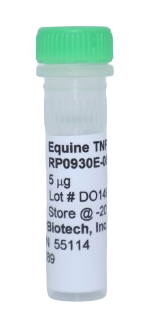
Equine TNF alpha Recombinant Protein
- Catalog Number:
- RP0930E
- Availability:
- In stock
- Application:
- Cell Culture, Control, ELISA, ELISpot Control, Western Blot Control
- 100% Homology:
- Equus caballus (horse), Equus przewalskii (Przewalski's horse)
 Powered by Bioz
 - Equine TNF-α (catalog RP0930E) is a yeast-derived cytokine supplied lyophilized without carrier protein in 10% trehalose; it has no affinity tags and is naturally endotoxin-free, and should be reconstituted in sterile PBS that contains at least 0.1% carrier protein. The protein is ~17.1 kDa, 157 amino acids long (full sequence provided), and >98% pure by SDS-PAGE, with 100% amino-acid homology to horse and Przewalski's horse. Store at -20°C (stable up to twelve months from date of receipt; working aliquots with carrier protein stable ~3 months) and avoid repeated freeze/thaw cycles. Product origin is the USA. It is commonly used to study TNF-α signaling and inflammatory responses (including regulation of immune-cell activation, apoptosis, and cytokine production); typical experimental uses include cell-culture stimulation and dosing studies, cytokine signaling assays, ELISA and neutralization assays, flow-cytometry and Western blot controls, and antibody generation/validation. Kingfisher Biotech products are supplied for research applications and are not intended for medicinal, diagnostic, or therapeutic use.
| Amino Acid Sequence | LRSSSRTPSD KPVAHVVANP QAEGQLQWLS GRANALLANG VKLTDNQLVV PLDGLYLIYS QVLFKGQGCP STHVLLTHTI SRLAVSYPSK VNLLSAIKSP CHTESPEQAE AKPWYEPIYL GGVFQLEKGD QLSAEINQPN YLDFAESGQV YFGIIAL (157) |
| Endotoxin | Naturally endotoxin-free |
| Form | Lyophilized |
| Storage Conditions | -20°C |
| Molecular Weight | 17.1 kDa |
| Purity | >98% as visualized by SDS-PAGE analysis. |
| Expression System | Yeast |
| Form | Lyophilized |
| Country Of Origin | USA |
Equine Tumor Necrosis Factor Alpha (TNF-α) (also known as TNF or cachectin) is a proinflammatory cytokine that plays a central role in innate immune responses, inflammation, and host defense against pathogens in horses (Equus caballus). TNF-α is a member of the tumor necrosis factor (TNF) superfamily, which includes related cytokines such as TNF-β (lymphotoxin-α), Fas ligand (FasL), CD40 ligand (CD40L), and TRAIL, proteins that regulate immune signaling, apoptosis, and inflammatory pathways. In horses, TNF-α is primarily produced by activated macrophages, monocytes, dendritic cells, and T lymphocytes in response to infection, endotoxin exposure, or tissue injury. TNF-α exerts its biological effects by binding to TNF receptors TNFR1 (p55) and TNFR2 (p75), activating intracellular signaling pathways including NF-κB, MAPK, and caspase-mediated pathways, which regulate cytokine production, immune cell activation, apoptosis, and inflammatory responses. In equine health, TNF-α is an important mediator of inflammatory responses associated with bacterial infections, endotoxemia, and systemic inflammatory conditions, including colic-associated endotoxemia, septicemia, and equine laminitis, where elevated TNF-α levels contribute to vascular inflammation and tissue damage. TNF-α also participates in immune responses to respiratory infections and inflammatory airway diseases. Because TNF-α is a key regulator of inflammation and immune defense, equine TNF-α is widely studied in veterinary immunology, inflammatory disease research, and endotoxemia models, contributing to improved understanding of immune responses and inflammatory regulation in horses.
Citations
Please choose a size to see price
RELATED MEDIA
