Slide 1 of 1 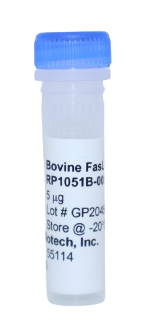
Bovine Fas Ligand (TNFSF6) Recombinant Protein
- Catalog Number:
- RP1051B
- Availability:
- In stock
- Application:
- Cell Culture, Control, ELISA, ELISpot Control, Western Blot Control
- 100% Homology:
- Bison bison bison (American buffalo), Bos indicus (zebu), Bos taurus (cattle), Bubalus bubalis (water buffalo)
 Powered by Bioz
 - Bovine Fas Ligand (FasL, CD95L, TNFSF6) (catalog RP1051B) is a yeast-derived cytokine supplied lyophilized without carrier protein in 10% trehalose; it has no affinity tags and is naturally endotoxin-free, and should be reconstituted in sterile PBS that contains at least 0.1% carrier protein. The protein is ~17.3 kDa, 152 amino acids long (full sequence provided), and >98% pure by SDS-PAGE, with 100% amino-acid homology to cattle, zebu, American buffalo, and water buffalo. Store at -20°C (stable up to twelve months from date of receipt; working aliquots with carrier protein stable ~3 months) and avoid repeated freeze/thaw cycles. Product origin is the USA. It is commonly used to study Fas/FasL signaling and apoptosis (including regulation of programmed cell death and immune homeostasis); typical experimental uses include cell-culture stimulation and apoptosis assays, signaling studies, ELISA and neutralization assays, flow-cytometry and Western blot controls, and antibody generation/validation. Kingfisher Biotech products are supplied for research applications and are not intended for medicinal, diagnostic, or therapeutic use.
| Amino Acid Sequence | QIGHPSPPSE KKELKKAAHL TGKLNSRSIP LEWEDTYGIA LVSGVKYKKG SLVINETGLY FVYSKVYFRG QSCNNQPLSH KVYSRNFRYP QDMVLMEGKM MNYCTSGKMW ARSSYLGAVF NLTSADHLYV NVSELSLVSF EESKTFFGLY KL (152) |
| Endotoxin | Naturally endotoxin-free |
| Form | Lyophilized |
| Storage Conditions | -20°C |
| Molecular Weight | 17.3 kDa |
| Purity | >98% as visualized by SDS-PAGE analysis. |
| Expression System | Yeast |
| Form | Lyophilized |
| Country Of Origin | USA |
Bovine Fas Ligand (FasL, CD95L, gene FASLG) is a type II transmembrane protein belonging to the tumor necrosis factor (TNF) superfamily, which includes related ligands such as TNF-α, TRAIL (TNFSF10), and CD40L (CD154) that regulate immune signaling, inflammation, and apoptosis. In cattle (Bos taurus), Fas ligand is expressed primarily on activated T lymphocytes, natural killer (NK) cells, and some immune regulatory cells, where it interacts with its receptor Fas (CD95) on target cells. Binding of FasL to Fas triggers the extrinsic apoptotic pathway, activating caspase signaling cascades that lead to programmed cell death. In bovine immunity, the Fas–FasL system plays an important role in regulating immune homeostasis by eliminating infected, damaged, or excess immune cells, helping control immune responses and prevent excessive inflammation. This pathway is also involved in cytotoxic T-cell–mediated killing of virus-infected or abnormal cells during infection. In bovine health, Fas ligand activity contributes to immune regulation during infectious diseases and inflammatory conditions, and dysregulation of Fas–FasL signaling may influence immune-mediated tissue damage or impaired immune control of infection. Because apoptosis and immune regulation are highly conserved processes, bovine Fas ligand is studied in comparative immunology and veterinary infectious disease research to better understand immune cell apoptosis, cytotoxic immune mechanisms, and host–pathogen interactions in livestock species.
Citations
Please choose a size to see price
RELATED MEDIA
