Slide 1 of 1 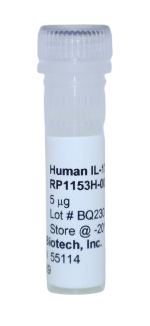
Human IL-17F Recombinant Protein
- Catalog Number:
- RP1153H
- Availability:
- In stock
- Application:
- Cell Culture, Control, ELISA, ELISpot Control, Western Blot Control
- 100% Homology:
- Gorilla gorilla gorilla (western lowland gorilla), Homo sapiens (human)
 Powered by Bioz
 - Human IL-17F (Interleukin-17F) (catalog RP1153H) is a yeast-derived cytokine supplied lyophilized without carrier protein in 10% trehalose; it has no affinity tags and is naturally endotoxin-free, and should be reconstituted in sterile PBS that contains at least 0.1% carrier protein. The protein is ~15.0 kDa, 134 amino acids long (full sequence provided), and >98% pure by SDS-PAGE, with 100% amino-acid homology to human and western lowland gorilla. Store at -20°C (stable up to twelve months from date of receipt; working aliquots with carrier protein stable ~3 months) and avoid repeated freeze/thaw cycles. Product origin is the USA. It is commonly used to study IL-17F signaling and inflammatory responses (including regulation of cytokine production and neutrophil recruitment); typical experimental uses include cell-culture stimulation and dosing studies, cytokine signaling assays, ELISA and neutralization assays, flow-cytometry and Western blot controls, and antibody generation/validation. Kingfisher Biotech products are supplied for research applications and are not intended for medicinal, diagnostic, or therapeutic use.
| Amino Acid Sequence | ARKIPKVGHT FFQKPESCPP VPGGSMKLDI GIINENQRVS MSRNIESRST SPWNYTVTWD PNRYPSEVVQ AQCRNLGCIN AQGKEDISMN SVPIQQETLV VRRKHQGCSV SFQLEKVLVT VGCTCVTPVI HHVQ (134) |
| Endotoxin | Naturally endotoxin-free |
| Form | Lyophilized |
| Storage Conditions | -20°C |
| Molecular Weight | 15.0 kDa |
| Purity | >98% as visualized by SDS-PAGE analysis. |
| Expression System | Yeast |
| Form | Lyophilized |
| Country Of Origin | USA |
Human IL-17F (Interleukin-17F) is a pro-inflammatory cytokine belonging to the IL-17 family that plays an important role in host defense and immune-mediated inflammation. IL-17F is produced primarily by Th17 CD4⁺ T cells, as well as by γδ T cells, innate lymphoid cells (ILC3s), and other activated lymphocyte populations in response to microbial infection and inflammatory stimuli. It signals through the IL-17 receptor complex (IL-17RA/IL-17RC) to induce expression of pro-inflammatory cytokines (such as IL-6 and TNF-α), chemokines (including CXCL8/IL-8), and antimicrobial peptides, thereby promoting neutrophil recruitment and strengthening mucosal barrier immunity, particularly in the respiratory and gastrointestinal tracts. IL-17F can act independently or synergistically with IL-17A to amplify inflammatory signaling. In healthy individuals, basal IL-17F levels are typically low, but expression increases during bacterial and fungal infections and in chronic inflammatory conditions. Dysregulated IL-17F has been implicated in psoriasis, asthma, inflammatory bowel disease, rheumatoid arthritis, and other autoimmune or inflammatory disorders. In clinical and translational research, human IL-17F is studied as a mediator of Th17-driven immune responses and neutrophilic inflammation and as a potential therapeutic target in immune-mediated inflammatory diseases.
Citations
Please choose a size to see price
RELATED MEDIA
