Slide 1 of 1 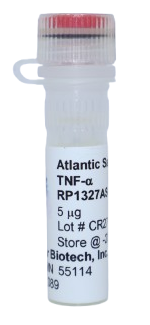
Atlantic Salmon TNF alpha Recombinant Protein
- Catalog Number:
- RP1327AS
- Availability:
- In stock
- Application:
- Cell Culture, Control, ELISA, ELISpot Control, Western Blot Control
- 100% Homology:
- Salmo salar (Atlantic salmon)
 Powered by Bioz
 - Atlantic Salmon TNF-α (Tumor Necrosis Factor alpha) (catalog RP1327AS) is a yeast-derived cytokine supplied lyophilized without carrier protein in 10% trehalose; it has no affinity tags and is naturally endotoxin-free, and should be reconstituted in sterile PBS that contains at least 0.1% carrier protein. The protein is ~16.9 kDa, 152 amino acids long (full sequence provided), and >98% pure by SDS-PAGE, with 100% amino-acid homology to Atlantic salmon. Store at -20°C (stable up to twelve months from date of receipt; working aliquots with carrier protein stable ~3 months) and avoid repeated freeze/thaw cycles. Product origin is the USA. It is commonly used to study TNF-α signaling and immune responses (including regulation of inflammation, apoptosis, and innate immune activation); typical experimental uses include cell-culture stimulation and dosing studies, cytokine signaling assays, ELISA and neutralization assays, flow-cytometry and Western blot controls, and antibody generation/validation. Kingfisher Biotech products are supplied for research applications and are not intended for medicinal, diagnostic, or therapeutic use.
| Amino Acid Sequence | AAIHLEGEYN PNLTADTVQW RKDDGQAFSQ GGFELQGNQI LIPHTGLFFV YSQASFRVKC NGPGENTTPL SHVIWRYSDS IGVNANLLSG VRSVCQRNYG DAESNIGEAW YNAVYLGAVF QLNEGDKLWT ETNRLTNVEP EQGKNFFGVF EL (152) |
| Endotoxin | Naturally endotoxin-free |
| Form | Lyophilized |
| Storage Conditions | -20°C |
| Molecular Weight | 16.9 kDa |
| Purity | >98% as visualized by SDS-PAGE analysis. |
| Expression System | Yeast |
| Form | Lyophilized |
| Country Of Origin | USA |
Atlantic Salmon (Salmo salar) Tumor Necrosis Factor Alpha (TNF-α) is a proinflammatory cytokine that plays an important role in innate immune responses, inflammation, and host defense against pathogens in teleost fish. TNF-α belongs to the tumor necrosis factor (TNF) superfamily, which in vertebrates includes molecules such as TNF-α, TNF-β (lymphotoxin), Fas ligand (FasL), CD40 ligand (CD40L), and TRAIL, all involved in regulating immune signaling, apoptosis, and inflammatory responses. In Atlantic salmon, TNF-α is primarily produced by activated macrophages, monocytes, and other immune cells following infection, tissue injury, or exposure to pathogen-associated molecular patterns. TNF-α signals through TNF receptor homologs that activate intracellular pathways such as NF-κB and MAPK, leading to the induction of proinflammatory cytokines, antimicrobial responses, and immune cell recruitment. In salmon, TNF-α plays a critical role in defense against bacterial and viral pathogens common in aquaculture, including Aeromonas salmonicida, Vibrio species, and infectious salmon anemia virus (ISAV), by promoting inflammatory responses and activation of innate immune defenses. TNF-α is also involved in regulating immune responses in key mucosal tissues such as the gills, skin, and intestine, which serve as major pathogen entry points in aquatic environments. Because Atlantic salmon is an important aquaculture species, characterization of salmon TNF-α supports research on fish immunology, host–pathogen interactions, and disease resistance, contributing to improved understanding of immune regulation and health management in aquaculture systems.
Citations
Please choose a size to see price
RELATED MEDIA
