Slide 1 of 1 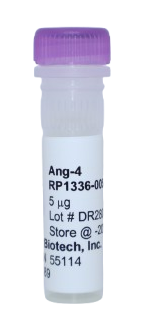
Multi-species (Swine, Mouse) Angiogenin-4 (Ang-4) Recombinant Protein
- Catalog Number:
- RP1336
- Availability:
- In stock
- Application:
- Cell Culture, Control, ELISA, ELISpot Control, Western Blot Control
- 100% Homology:
- Mus musculus (house mouse), Sus scrofa (pig)
 Powered by Bioz
 - Mouse/Swine Ang-4 (Angiopoietin-4) (catalog RP1336) is a yeast-derived growth factor supplied lyophilized without carrier protein in 10% trehalose; it has no affinity tags and is naturally endotoxin-free, and should be reconstituted in sterile PBS that contains at least 0.1% carrier protein. The protein is ~13.9 kDa, 120 amino acids long (full sequence provided), and >98% pure by SDS-PAGE, with 100% amino-acid homology to house mouse and pig. Store at -20°C (stable up to twelve months from date of receipt; working aliquots with carrier protein stable ~3 months) and avoid repeated freeze/thaw cycles. Product origin is the USA. It is commonly used to study Ang-4 signaling and vascular biology (including regulation of angiogenesis, vascular remodeling, and endothelial cell function); typical experimental uses include cell-culture stimulation and angiogenesis assays, signaling studies, ELISA and neutralization assays, flow-cytometry and Western blot controls, and antibody generation/validation. Kingfisher Biotech products are supplied for research applications and are not intended for medicinal, diagnostic, or therapeutic use.
| Amino Acid Sequence | QNERYEKFLR QHYDAKPNGR DDRYCESMMK ERKLTSPCKD VNTFIHGTKK NIRAICGKKG SPYGENFRIS NSPFQITTCT HSGASPRPPC GYRAFKDFRY IVIACEDGWP VHFDESFISP (120) |
| Endotoxin | Naturally endotoxin-free |
| Form | Lyophilized |
| Storage Conditions | -20°C |
| Molecular Weight | 13.9 kDa |
| Purity | >98% as visualized by SDS-PAGE analysis. |
| Expression System | Yeast |
| Form | Lyophilized |
| Country Of Origin | USA |
Angiogenin-4 (ANG4) in swine (Sus scrofa) and mouse (Mus musculus) is a member of the RNase A superfamily and is identical at the amino acid sequence level in these two species, enabling cross-species applicability in comparative research. ANG4 is primarily expressed in the gastrointestinal tract, particularly by Paneth cells in the small intestine, where it plays a key role in innate mucosal immunity rather than classical angiogenesis. It possesses ribonuclease activity and exhibits antimicrobial properties against select bacterial and fungal species, contributing to maintenance of intestinal microbial homeostasis and epithelial barrier defense. ANG4 expression is regulated by microbial colonization and immune signaling pathways, including Th2-associated cytokines such as IL-13, linking it to type 2 immune responses and host–microbiota interactions. In both swine and mouse models, ANG4 is upregulated during helminth infection, inflammatory bowel disease–like conditions, intestinal injury, and immune stimulation. Due to the physiological and gastrointestinal similarities between pigs and humans, and the extensive use of mouse models in immunology, characterization of ANG4 in swine and mouse provides valuable insight into Paneth cell biology, mucosal immunity, microbiome regulation, and intestinal inflammatory disease mechanisms in translational research settings.
Citations
Please choose a size to see price
RELATED MEDIA
