Slide 1 of 1 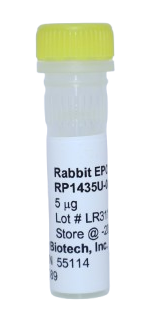
Rabbit Erythropoietin (EPO) Recombinant Protein
- Catalog Number:
- RP1435U
- Availability:
- In stock
- Application:
- Cell Culture, Control, ELISA, ELISpot Control, Western Blot Control
- 100% Homology:
- Oryctolagus cuniculus (rabbit)
 Powered by Bioz
 - Rabbit EPO (Erythropoietin) (catalog RP1435U) is a yeast-derived cytokine supplied lyophilized without carrier protein in 10% trehalose; it has no affinity tags and is naturally endotoxin-free, and should be reconstituted in sterile PBS that contains at least 0.1% carrier protein. The protein is ~18.2 kDa, 167 amino acids long (full sequence provided), and >98% pure by SDS-PAGE, with 100% amino-acid homology to rabbit. Store at -20°C (stable up to twelve months from date of receipt; working aliquots with carrier protein stable ~3 months) and avoid repeated freeze/thaw cycles. Product origin is the USA. It is commonly used to study EPO signaling and hematopoiesis (including regulation of erythroid progenitor proliferation, differentiation, and survival); typical experimental uses include cell-culture stimulation and differentiation assays, cytokine signaling studies, ELISA and neutralization assays, flow-cytometry and Western blot controls, and antibody generation/validation. Kingfisher Biotech products are supplied for research applications and are not intended for medicinal, diagnostic, or therapeutic use.
| Amino Acid Sequence | APARLICDSR VLERYILEAK EAENVTMGCA EGCSLGENIT VPDTKVNFHH WKKSEAGRHA VEVWQGLALL SEAMLRSQAL LANSSQLPET LQVHVDKAVS GLRSLTSLLR ALGVQKEAVS PPEAASSAAP LRTVAADTLC KLFRIYSNFL RGKLKLYTGE ACRRGDR (167) |
| Endotoxin | Naturally endotoxin-free |
| Form | Lyophilized |
| Storage Conditions | -20°C |
| Molecular Weight | 18.2 kDa |
| Purity | >98% as visualized by SDS-PAGE analysis. |
| Expression System | Yeast |
| Form | Lyophilized |
| Country Of Origin | USA |
Rabbit erythropoietin (EPO) is a glycoprotein hormone produced primarily by the kidneys in response to hypoxia that regulates erythropoiesis by binding to the erythropoietin receptor (EPOR) on erythroid progenitor cells, activating JAK2/STAT5, PI3K/Akt, and MAPK signaling pathways to promote red blood cell survival, proliferation, and differentiation. In rabbits, EPO is essential for maintaining oxygen homeostasis and supporting recovery from anemia caused by blood loss, nutritional deficiencies, chronic disease, or experimental interventions. In rabbit health, EPO contributes to normal growth, tissue oxygenation, and adaptation to physiological stress, while dysregulated erythropoiesis may be associated with renal dysfunction or hematologic disorders. Rabbits are widely used as animal models in hematology, cardiovascular research, renal physiology, and regenerative medicine due to their manageable size and physiological similarities to humans. Consequently, rabbit EPO is an important tool for studying erythropoiesis, hypoxia-inducible factor (HIF) signaling, anemia associated with chronic kidney disease, and the preclinical evaluation of erythropoiesis-stimulating agents and tissue-protective therapies relevant to human medicine.
Citations
Please choose a size to see price
RELATED MEDIA
