Slide 1 of 1 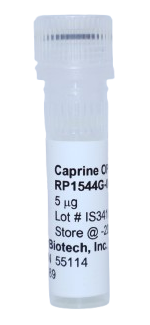
Caprine Osteopontin (OPN) Recombinant Protein
- Catalog Number:
- RP1544G
- Availability:
- In stock
- Application:
- Cell Culture, Control, ELISA, ELISpot Control, Western Blot Control
- 100% Homology:
- Capra hircus (goat)
 Powered by Bioz
 - Caprine OPN (Osteopontin) (catalog RP1544G) is a yeast-derived cytokine supplied lyophilized without carrier protein in 10% trehalose; it has no affinity tags and is naturally endotoxin-free, and should be reconstituted in sterile PBS that contains at least 0.1% carrier protein. The protein is ~29.4 kDa, 262 amino acids long (full sequence provided), and >98% pure by SDS-PAGE, with 100% amino-acid homology to goat. Store at -20°C (stable up to twelve months from date of receipt; working aliquots with carrier protein stable ~3 months) and avoid repeated freeze/thaw cycles. Product origin is the USA. It is commonly used to study osteopontin signaling and cellular processes (including regulation of cell adhesion, migration, immune responses, and bone remodeling); typical experimental uses include cell-culture stimulation and adhesion/migration assays, signaling studies, ELISA and neutralization assays, flow-cytometry and Western blot controls, and antibody generation/validation. Kingfisher Biotech products are supplied for research applications and are not intended for medicinal, diagnostic, or therapeutic use.
| Amino Acid Sequence | LPVKPTSSGS SEEKLLNNKY PDAVATWLKP DPSQKQTFLE PQNSVSSEET DDNKQNTLPS KSNESPEQTD DLDDDDETRH EVNSNDSDDA KTPDDSDHSN ESHHSDESDE ADFPTDIPTI AVFTPPFPTE STNDGRGDSV AYGLKSKSKK FRRSNVESPD ATEEDFTSHI ESEEMHDAPK KTSQLTDHSE ETNSDELSKE LTPKAQEESK HSNRIESQEN SKLSQEFHSL EDKLDLDHKS EEDKRLKIRI SHELDSASSK VN (262) |
| Endotoxin | Naturally endotoxin-free |
| Form | Lyophilized |
| Storage Conditions | -20°C |
| Molecular Weight | 29.4 kDa |
| Purity | >98% as visualized by SDS-PAGE analysis. |
| Expression System | Yeast |
| Form | Lyophilized |
| Country Of Origin | USA |
Caprine Osteopontin (OPN) (also known as SPP1, Secreted Phosphoprotein 1, bone sialoprotein I, ETA-1, or early T-lymphocyte activation-1) is a multifunctional phosphorylated glycoprotein involved in immune regulation, cell adhesion, and tissue remodeling in goats (Capra hircus). Osteopontin interacts with integrins (such as αvβ3 and αvβ1) and CD44 receptors, activating signaling pathways that regulate cell migration, inflammatory responses, and extracellular matrix remodeling. In goats, OPN is produced by osteoblasts, macrophages, epithelial cells, and activated T lymphocytes, and plays important roles in bone metabolism, immune responses, and reproductive physiology. In caprine health, osteopontin is highly expressed in the uterine endometrium and placenta, where it contributes to embryo implantation, placental development, and maternal–fetal communication, making it important for successful pregnancy and reproductive efficiency. OPN also participates in inflammatory responses during mastitis and infectious diseases, where it helps regulate leukocyte recruitment and cytokine signaling in affected tissues. While osteopontin supports immune defense and tissue repair, excessive or prolonged expression may contribute to chronic inflammation or fibrotic tissue remodeling. As a regulator of immune cell migration, tissue remodeling, and reproductive signaling, caprine osteopontin is important for studies of host–pathogen interactions, mammary gland immunity, bone biology, and reproductive function relevant to goat health and small ruminant veterinary research.
Citations
Please choose a size to see price
RELATED MEDIA
