Slide 1 of 1 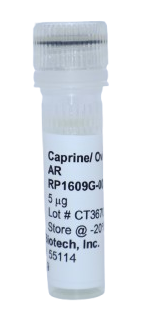
Multi-species (Ovine, Caprine) Amphiregulin Recombinant Protein
- Catalog Number:
- RP1609G
- Availability:
- In stock
- Application:
- Cell Culture, Control, ELISA, ELISpot Control, Western Blot Control
- 100% Homology:
- Capra hircus (goat), Ovis aries (sheep), Pantholops hodgsonii (chiru)
 Powered by Bioz
 - Ovine/Caprine Amphiregulin (AR) (catalog RP1609G) is a yeast-derived growth factor supplied lyophilized without carrier protein in 10% trehalose; it has no affinity tags and is naturally endotoxin-free, and should be reconstituted in sterile PBS that contains at least 0.1% carrier protein. The protein is ~10.2 kDa, 87 amino acids long (full sequence provided), and >98% pure by SDS-PAGE, with amino-acid homology to sheep, goat, and chiru. Store at -20°C (stable up to twelve months from date of receipt; working aliquots with carrier protein stable ~3 months) and avoid repeated freeze/thaw cycles. Product origin is the USA. It is commonly used to study amphiregulin/EGFR signaling and cellular processes (including regulation of cell proliferation, differentiation, and tissue repair); typical experimental uses include cell-culture stimulation and growth assays, signaling studies, ELISA and neutralization assays, flow-cytometry and Western blot controls, and antibody generation/validation. Kingfisher Biotech products are supplied for research applications and are not intended for medicinal, diagnostic, or therapeutic use.
| Amino Acid Sequence | SVRVEQVVKP KKNKTESEKT SDKPKRKKKG GKNGKNRRNR KRKNLCDTEF QNFCIHGKCT FLEQLETVSC QCYPEYFGER CGEKSMK (87) |
| Endotoxin | Naturally endotoxin-free |
| Form | Lyophilized |
| Storage Conditions | -20°C |
| Molecular Weight | 10.2 kDa |
| Purity | >98% as visualized by SDS-PAGE analysis. |
| Expression System | Yeast |
| Form | Lyophilized |
| Country Of Origin | USA |
Ovine/Caprine amphiregulin (AREG) is a member of the epidermal growth factor (EGF) family and functions as a ligand for the epidermal growth factor receptor (EGFR/ErbB1), where it regulates epithelial cell proliferation, differentiation, survival, and tissue repair. The amphiregulin protein sequence is identical in sheep (Ovis aries) and goats (Capra hircus), enabling cross-species detection and translational applicability in small ruminant research. In both species, amphiregulin is produced by epithelial cells, keratinocytes, fibroblasts, and activated immune cells—including Th2 cells and regulatory T cells—in response to tissue injury, inflammation, allergen exposure, and microbial stimulation. Through activation of EGFR-dependent signaling pathways such as MAPK and PI3K/AKT, ovine/caprine amphiregulin contributes to mucosal barrier maintenance, wound healing, tissue remodeling, and regulation of inflammatory responses in respiratory, gastrointestinal, mammary, and cutaneous tissues. Dysregulated expression may be associated with chronic inflammation, fibrosis, mastitis-related tissue remodeling, parasitic infections, and neoplastic processes. In veterinary and comparative medicine research, amphiregulin is of interest in small ruminant models of respiratory disease, gastrointestinal inflammation, wound repair, mammary gland biology, and translational studies of EGFR-mediated signaling pathways. Characterizing amphiregulin expression in sheep and goats provides valuable insight into epithelial–immune crosstalk, regenerative mechanisms, and inflammatory regulation in agricultural and biomedical research contexts.
Citations
Please choose a size to see price
RELATED MEDIA
