Slide 1 of 1 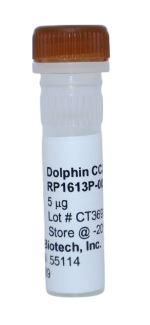
Dolphin CCL14 Recombinant Protein
- Catalog Number:
- RP1613P
- Availability:
- In stock
- Application:
- Cell Culture, Control, ELISA, ELISpot Control, Western Blot Control
- 100% Homology:
- Tursiops truncatus (bottlenose dolphin) [Leu75Gln]
 Powered by Bioz
 - Dolphin CCL14 (HCC-1, Hemofiltrate CC Chemokine 1) (catalog RP1613P) is a yeast-derived chemokine supplied lyophilized without carrier protein in 10% trehalose; it has no affinity tags and is naturally endotoxin-free, and should be reconstituted in sterile PBS that contains at least 0.1% carrier protein. The protein is ~10.5 kDa, 93 amino acids long (full sequence provided), and >98% pure by SDS-PAGE, with amino-acid homology to bottlenose dolphin. Store at -20°C (stable up to twelve months from date of receipt; working aliquots with carrier protein stable ~3 months) and avoid repeated freeze/thaw cycles. Product origin is the USA. It is commonly used to study CCL14/HCC-1 signaling and immune-cell chemotaxis (including recruitment of monocytes and other leukocytes during inflammatory responses); typical experimental uses include cell-culture stimulation and migration assays, chemotaxis and signaling studies, ELISA and neutralization assays, flow-cytometry and Western blot controls, and antibody generation/validation. Kingfisher Biotech products are supplied for research applications and are not intended for medicinal, diagnostic, or therapeutic use.
| Amino Acid Sequence | SKTESDSRGP YPPTECCYSY LTRPIRKHWI SRYYETGGLC SKPGIVFITK NGRKLCANPS DDWVQDYIKG AGGDQSDPEV AEKDTAQNLK RWG (93) |
| Endotoxin | Naturally endotoxin-free |
| Form | Lyophilized |
| Storage Conditions | -20°C |
| Molecular Weight | 10.5 kDa |
| Purity | >98% as visualized by SDS-PAGE analysis. |
| Expression System | Yeast |
| Form | Lyophilized |
| Country Of Origin | USA |
Dolphin CCL14 (C-C motif chemokine ligand 14), also known as HCC-1 (Hemofiltrate CC chemokine-1), is a member of the CC chemokine family that participates in leukocyte trafficking and regulation of inflammatory responses in dolphins (e.g., Tursiops truncatus). CCL14 is produced primarily by monocytes, macrophages, epithelial cells, and certain stromal tissues, and—following proteolytic activation of its precursor form—functions through chemokine receptors such as CCR1, CCR3, and CCR5 to promote chemotaxis of monocytes, eosinophils, and select T lymphocyte subsets. As in other mammals, dolphin CCL14 is synthesized as a relatively low-activity precursor that requires enzymatic processing to achieve full chemotactic potency. In healthy dolphins, basal circulating levels are expected to be low to moderate, supporting immune surveillance; however, expression may increase during infection, inflammatory lung disease, skin lesions, environmental stress exposure, or systemic immune activation. In marine mammal and comparative immunology research, dolphin CCL14 is of interest as a mediator of mononuclear cell recruitment and as a potential biomarker of inflammatory and immune responses in both managed and free-ranging populations.
Citations
Please choose a size to see price
RELATED MEDIA
