Slide 1 of 1 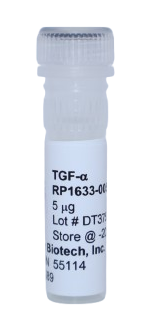
Multi-species (Canine, Equine, Feline, Ferret, Mink, Swine) TGF-alpha Recombinant Protein
- Catalog Number:
- RP1633
- Availability:
- In stock
- Application:
- Cell Culture, Control, ELISA, ELISpot Control, Western Blot Control
- 100% Homology:
- Acinonyx jubatus (cheetah), Ailuropoda melanoleuca (giant panda), Callorhinus ursinus (northern fur seal), Camelus bactrianus (Bactrian camel), Camelus dromedarius (Arabian camel), Canis lupus dingo (dingo), Canis lupus familiaris (dog), Ceratotherium simum simum (southern white rhinoceros), Equus asinus (ass), Equus caballus (horse), Equus przewalskii (Przewalski's horse), Eumetopias jubatus (Steller sea lion), Felis catus (domestic cat), Leptonychotes weddellii (Weddell seal), Loxodonta africana (African savanna elephant), Lynx pardinus (Spanish lynx), Mustela putorius furo (domestic ferret), Neogale vison (American mink), Neomonachus schauinslandi (Hawaiian monk seal), Odobenus rosmarus divergens (Pacific walrus), Panthera pardus (leopard), Panthera tigris altaica (Amur tiger), Sus scrofa (pig), Trichechus manatus latirostris (Florida manatee), Ursus arctos horribilis (grizzly bear), Vicugna pacos (alpaca), Zalophus californianus (California sea lion)
 Powered by Bioz
 - Multi-species TGF-α (Transforming Growth Factor alpha) (catalog RP1633) is a yeast-derived growth factor supplied lyophilized without carrier protein in 10% trehalose; it has no affinity tags and is naturally endotoxin-free, and should be reconstituted in sterile PBS that contains at least 0.1% carrier protein. The protein is ~5.5 kDa, 50 amino acids long (full sequence provided), and >98% pure by SDS-PAGE, with 100% amino-acid homology to dog, pig, horse, domestic cat, domestic ferret, American mink, cheetah, giant panda, northern fur seal, Bactrian camel, Arabian camel, dingo, southern white rhinoceros, ass, Przewalski's horse, Steller sea lion, Weddell seal, African savanna elephant, Spanish lynx, Hawaiian monk seal, Pacific walrus, leopard, Amur tiger, Florida manatee, grizzly bear, alpaca, and California sea lion. Store at -20°C (stable up to twelve months from date of receipt; working aliquots with carrier protein stable ~3 months) and avoid repeated freeze/thaw cycles. Product origin is the USA. It is commonly used to study TGF-α/EGFR signaling and cellular processes (including regulation of cell proliferation, differentiation, and tissue development); typical experimental uses include cell-culture stimulation and growth assays, signaling studies, ELISA and neutralization assays, flow-cytometry and Western blot controls, and antibody generation/validation. Kingfisher Biotech products are supplied for research applications and are not intended for medicinal, diagnostic, or therapeutic use.
| Amino Acid Sequence | VVSHFNDCPD SHSQFCFHGT CRFLVQEDKP ACVCHSGYVG ARCEHADLLA (50) |
| Endotoxin | Naturally endotoxin-free |
| Form | Lyophilized |
| Storage Conditions | -20°C |
| Molecular Weight | 5.5 kDa |
| Purity | >98% as visualized by SDS-PAGE analysis. |
| Expression System | Yeast |
| Form | Lyophilized |
| Country Of Origin | USA |
Canine, Equine, Feline, Ferret, Mink, and Swine Transforming Growth Factor Alpha (TGF-α) is a member of the epidermal growth factor (EGF) family of growth factors, which also includes epidermal growth factor (EGF), amphiregulin, betacellulin, epiregulin, and heparin-binding EGF-like growth factor (HB-EGF). In dogs (Canis lupus familiaris), horses (Equus caballus), cats (Felis catus), ferrets (Mustela putorius furo), mink (Neovison vison), and pigs (Sus scrofa), the mature TGF-α protein is identical at the amino acid level, indicating strong evolutionary conservation and suggesting highly similar biological functions across these mammalian species. TGF-α is synthesized as a membrane-bound precursor (pro–TGF-α) that is cleaved to release a soluble ligand capable of binding the epidermal growth factor receptor (EGFR/ErbB1). Activation of EGFR triggers intracellular signaling pathways including MAPK/ERK, PI3K/AKT, and JAK/STAT, which regulate cell proliferation, epithelial growth, differentiation, and tissue repair. In these species, TGF-α is expressed in tissues such as the skin, gastrointestinal tract, respiratory epithelium, mammary gland, and reproductive tissues, where it contributes to epithelial development, wound healing, and tissue regeneration. Dysregulated EGFR signaling involving TGF-α may also contribute to fibrotic processes and tumor development in epithelial and glandular tissues. Because several of these species serve as important veterinary patients and comparative biomedical models, characterization of TGF-α supports research on EGFR signaling, epithelial biology, tissue regeneration, and cancer biology relevant to both animal health and translational medicine.
Citations
Please choose a size to see price
RELATED MEDIA
