Slide 1 of 1 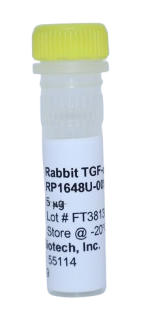
Multi-species (Human, Monkey, Rabbit) TGF-alpha Recombinant Protein
- Catalog Number:
- RP1648U
- Availability:
- In stock
- Application:
- Cell Culture, Control, ELISA, ELISpot Control, Western Blot Control
- 100% Homology:
- Aotus nancymaae (Ma's night monkey), Cebus imitator (Panamanian white-faced capuchin), Cercocebus atys (sooty mangabey), Chlorocebus sabaeus (green monkey), Colobus angolensis palliates (Peters’s Angola colobus), Ctenodactylus gundi (northern gundi), Galeopterus variegatus (Sunda flying lemur), Gorilla gorilla gorilla (western lowland gorilla), Heterocephalus glaber (naked mole-rat), Homo sapiens (human), Lepus europaeus (European hare), Macaca fascicularis (crab-eating macaque), Macaca mulatta (Rhesus monkey), Macaca nemestrina (pig-tailed macaque), Mandrillus leucophaeus (drill), Nomascus leucogenys (northern white-cheeked gibbon), Nycticebus coucang (slow loris), Octodon degus (degu), Oryctolagus cuniculus (rabbit), Otolemur garnettii (small-eared galago), Pan paniscus (pygmy chimpanzee), Pan troglodytes (chimpanzee), Papio anubis (olive baboon), Piliocolobus tephrosceles (Ugandan red Colobus), Pongo pygmaeus (Bornean orangutan), Propithecus coquereli (Coquerel's sifaka), Rhinopithecus bieti (black snub-nosed monkey), Rhinopithecus roxellana (golden snub-nosed monkey), Saimiri boliviensis (Bolivian squirrel monkey), Sapajus apella (tufted capuchin), Symphalangus syndactylus (siamang), Trachypithecus francoisi (Francois's langur)
 Powered by Bioz
 - Human/Monkey/Rabbit TGF-α(Transforming Growth Factor alpha) (catalog RP1648U) is a yeast-derived growth factor supplied lyophilized without carrier protein in 10% trehalose; it has no affinity tags and is naturally endotoxin-free, and should be reconstituted in sterile PBS that contains at least 0.1% carrier protein. The protein is ~5.6 kDa, 50 amino acids long (full sequence provided), and >98% pure by SDS-PAGE, with 100% amino-acid homology to rabbit and degu. Store at -20°C (stable up to twelve months from date of receipt; working aliquots with carrier protein stable ~3 months) and avoid repeated freeze/thaw cycles. Product origin is the USA. It is commonly used to study TGF-α/EGFR signaling and cellular processes (including regulation of cell proliferation, differentiation, and tissue development); typical experimental uses include cell-culture stimulation and growth assays, signaling studies, ELISA and neutralization assays, flow-cytometry and Western blot controls, and antibody generation/validation. Kingfisher Biotech products are supplied for research applications and are not intended for medicinal, diagnostic, or therapeutic use.
| Amino Acid Sequence | VVSHFNQCPD SHTQFCFHGT CRFLVQEDKP ACVCHSGYVG ARCEHADLLA (50) |
| Endotoxin | Naturally endotoxin-free |
| Form | Lyophilized |
| Storage Conditions | -20°C |
| Molecular Weight | 5.6 kDa |
| Purity | >98% as visualized by SDS-PAGE analysis. |
| Expression System | Yeast |
| Form | Lyophilized |
| Country Of Origin | USA |
Transforming Growth Factor Alpha (TGF-α) is a member of the epidermal growth factor (EGF) family of growth factors, which also includes epidermal growth factor (EGF), amphiregulin, betacellulin, epiregulin, and heparin-binding EGF-like growth factor (HB-EGF). Rabbit, human, and monkey TGF-α share 100% amino-acid sequence identity and are synthesized as membrane-bound precursors (pro–TGF-α) that are proteolytically cleaved to release a soluble ligand capable of binding the epidermal growth factor receptor (EGFR/ErbB1). Activation of EGFR initiates intracellular signaling pathways including MAPK/ERK, PI3K/AKT, and JAK/STAT, which regulate cell proliferation, differentiation, epithelial growth, and tissue repair. TGF-α is expressed in multiple tissues, including the skin, gastrointestinal tract, liver, and reproductive tissues, where it contributes to epithelial cell turnover, organ development, and regeneration following tissue injury. TGF-α signaling has been studied in models of wound healing, epithelial regeneration, and cancer biology, where EGFR-mediated signaling influences cell proliferation and tissue remodeling. Because rabbit, human, and monkey TGF-α are 100% identical at the amino-acid level, this growth factor is particularly useful for comparative studies of EGFR signaling, epithelial biology, regenerative processes, and growth factor–mediated tissue repair across veterinary, translational, and human biomedical research.
Citations
Please choose a size to see price
RELATED MEDIA
