Slide 1 of 1 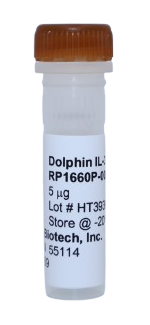
Dolphin IL-31 Recombinant Protein
- Catalog Number:
- RP1660P
- Availability:
- In stock
- Application:
- Cell Culture, Control, ELISA, ELISpot Control, Western Blot Control
- 100% Homology:
- Tursiops truncatus (bottlenose dolphin)
 Powered by Bioz
 - Dolphin IL-31 (Interleukin-31) (catalog RP1660P) is a yeast-derived cytokine supplied lyophilized without carrier protein in 10% trehalose; it has no affinity tags and is naturally endotoxin-free, and should be reconstituted in sterile PBS that contains at least 0.1% carrier protein. The protein is ~14.8 kDa, 130 amino acids long (full sequence provided), and >98% pure by SDS-PAGE, with 100% amino-acid homology to bottlenose dolphin. Store at -20°C (stable up to twelve months from date of receipt; working aliquots with carrier protein stable ~3 months) and avoid repeated freeze/thaw cycles. Product origin is the USA. It is commonly used to study IL-31 signaling and immune responses (including roles in inflammation, pruritus, and cytokine-mediated pathways); typical experimental uses include cell-culture stimulation and cytokine assays, signaling studies, ELISA and neutralization assays, flow-cytometry and Western blot controls, and antibody generation/validation. Kingfisher Biotech products are supplied for research applications and are not intended for medicinal, diagnostic, or therapeutic use.
| Amino Acid Sequence | SHTAPYVLGP DKQQAIIKEL RSSFEKLLND YQQEESGVPE SSQYQMPCFA LNPQLPYNID SSATLPYCRV IKPLFDNKAQ VVALIDHLSK LEFRHEPETK VSVPTDSFKC KSFIVSIFKK FSECLICLNH (130) |
| Endotoxin | Naturally endotoxin-free |
| Form | Lyophilized |
| Storage Conditions | -20°C |
| Molecular Weight | 14.8 kDa |
| Purity | >98% as visualized by SDS-PAGE analysis. |
| Expression System | Yeast |
| Form | Lyophilized |
| Country Of Origin | USA |
Dolphin Interleukin-31 (IL-31) is a cytokine involved in regulation of immune responses and inflammatory signaling in dolphins (family Delphinidae). IL-31 is produced primarily by activated T helper 2 (Th2) cells and other immune cells following immune stimulation. Dolphin IL-31 binds to a heterodimeric receptor complex composed of IL-31 receptor A (IL-31RA) and oncostatin M receptor (OSMR), activating intracellular signaling pathways such as JAK–STAT, MAPK, and PI3K that regulate gene expression, inflammation, and cellular responses. Through these signaling pathways, IL-31 contributes to modulation of immune responses, communication between immune cells and epithelial tissues, and regulation of inflammatory processes in tissues such as the skin and mucosal surfaces. In dolphins, IL-31 is believed to play roles in host defense and inflammatory regulation, and it is studied in marine mammal immunology and comparative biomedical research to better understand immune system function, responses to environmental pathogens, and mechanisms of inflammation in marine mammals.
Citations
Please choose a size to see price
RELATED MEDIA
