Slide 1 of 1 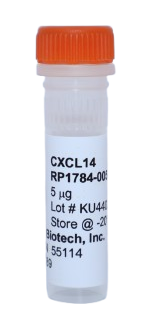
Multi-species (Canine, Equine, Human, Mink, Monkey, Ferret, Mink, Dolphin, Rabbit, Feline, Bat) CXCL14 Recombinant Protein
- Catalog Number:
- RP1784
- Availability:
- In stock
- Application:
- Cell Culture, Control, ELISA, ELISpot Control, Western Blot Control
- 100% Homology:
- Acinonyx jubatus (cheetah), Ailuropoda melanoleuca (giant panda), Aotus nancymaae (Ma's night monkey), Artibeus jamaicensis (Jamaican fruit-eating bat), Balaenoptera acutorostrata scammony (minke whale), Balaenoptera musculus (Blue whale), Callithrix jacchus (white-tufted-ear marmoset), Callorhinus ursinus (northern fur seal), Canis lupus dingo (dingo), Canis lupus familiaris (dog), Castor canadensis (American beaver), Cebus imitator (Panamanian white-faced capuchin), Ceratotherium simum simum (southern white rhinoceros), Cercocebus atys (sooty mangabey), Chlorocebus sabaeus (green monkey), Chrysochloris asiatica (Cape golden mole), Condylura cristata (star-nosed mole), Delphinapterus leucas (beluga whale), Desmodus rotundus (common vampire bat), Elephantulus edwardii (Cape elephant shrew), Eptesicus fuscus (big brown bat), Equus asinus (ass), Equus caballus (horse), Equus przewalskii (Przewalski's horse), Erinaceus europaeus (western European hedgehog), Eschrichtius robustus (grey whale), Eumetopias jubatus (Steller sea lion), Felis catus (domestic cat), Globicephala melas (long-finned pilot whale), Gorilla gorilla gorilla (western lowland gorilla), Halichoerus grypus (gray seal), Hipposideros armiger (great roundleaf bat), Homo sapiens (human), Hylobates moloch (silvery gibbon), Ictidomys tridecemlineatus (thirteen-lined ground squirrel), Lagenorhynchus obliquidens (Pacific white-sided dolphin), Leptonychotes weddellii (Weddell seal), Lipotes vexillifer (Yangtze River dolphin), Lontra canadensis (Northern American river otter), Loxodonta africana (African savanna elephant), Lynx canadensis (Canada lynx), Lynx pardinus (Spanish lynx), Macaca fascicularis (crab-eating macaque), Macaca mulatta (Rhesus monkey), Macaca nemestrina (pig-tailed macaque), Mandrillus leucophaeus (drill), Manis javanica (Malayan pangolin), Marmota flaviventris (yellow-bellied marmot), Marmota marmota marmota (Alpine marmot), Mirounga leonina (Southern elephant seal), Molossus molossus (Pallas's mastiff bat), Monodelphis domestica (gray short-tailed opossum), Monodon monoceros (narwhal), Mustela erminea (ermine), Mustela putorius furo (domestic ferret), Myotis brandtii (Brandt's bat), Myotis davidii (vesper bat), Myotis lucifugus (little brown bat), Myotis myotis (greater mouse-eared bat), Neogale vison (American mink), Neomonachus schauinslandi (Hawaiian monk seal), Nomascus leucogenys (northern white-cheeked gibbon), Ochotona princeps (American pika), Odobenus rosmarus divergens (Pacific walrus), Orcinus orca (killer whale), Orycteropus afer afer (aardvark), Oryctolagus cuniculus (rabbit), Otolemur garnettii (small-eared galago), Pan paniscus (pygmy chimpanzee), Pan troglodytes (chimpanzee), Panthera pardus (leopard), Panthera tigris altaica (Amur tiger), Papio anubis (olive baboon), Phoca vitulina (harbor seal), Phocoena sinus (vaquita), Phyllostomus discolor (pale spear-nosed bat), Physeter catodon (sperm whale), Piliocolobus tephrosceles (Ugandan red Colobus), Pipistrellus kuhlii (Kuhl's pipistrelle), Pongo abelii (Sumatran orangutan), Pteropus alecto (black flying fox), Pteropus vampyrus (large flying fox), Rhinolophus ferrumequinum (greater horseshoe bat), Rhinopithecus roxellana (golden snub-nosed monkey), Rousettus aegyptiacus (Egyptian rousette), Saimiri boliviensis boliviensis (Bolivian squirrel monkey), Sapajus apella (Tufted capuchin), Sorex araneus (European shrew), Suricata suricatta (meerkat), Theropithecus gelada (gelada), Trachypithecus francoisi (Francois's langur), Tupaia chinensis (Chinese tree shrew), Tursiops truncatus (common bottlenose dolphin), Urocitellus parryii (Arctic ground squirrel), Ursus arctos horribilis (grizzly bear), Ursus maritimus (polar bear), Vulpes vulpes (red fox), Zalophus californianus (California sea lion)
 Powered by Bioz
 - CXCL14 (BRAK, Breast and Kidney-Expressed Chemokine) (catalog RP1784) is a yeast-derived chemokine supplied lyophilized without carrier protein in 10% trehalose; it has no affinity tags and is naturally endotoxin-free, and should be reconstituted in sterile PBS that contains at least 0.1% carrier protein. The protein is ~9.4 kDa, 77 amino acids long (full sequence provided), and >98% pure by SDS-PAGE, with 100% amino-acid homology to a broad range of species including dog, horse, domestic cat, human, crab-eating macaque, domestic ferret, American mink, rabbit, bottlenose dolphin, Jamaican fruit-eating bat, greater horseshoe bat, Egyptian rousette, cheetah, giant panda, Ma's night monkey, minke whale, blue whale, marmoset, northern fur seal, dingo, American beaver, capuchin monkey, white rhinoceros, sooty mangabey, green monkey, Cape golden mole, star-nosed mole, beluga whale, common vampire bat, elephant shrew, big brown bat, donkey, Przewalski's horse, hedgehog, gray whale, sea lion, pilot whale, gorilla, gray seal, roundleaf bat, gibbon, ground squirrel, Pacific white-sided dolphin, Weddell seal, Yangtze River dolphin, river otter, African elephant, Canada lynx, Spanish lynx, rhesus monkey, pig-tailed macaque, drill, pangolin, marmot, elephant seal, mastiff bat, opossum, narwhal, ermine, Brandt's bat, vesper bat, little brown bat, mouse-eared bat, monk seal, gibbon, pika, walrus, killer whale, aardvark, galago, pygmy chimpanzee, chimpanzee, leopard, tiger, baboon, harbor seal, vaquita, spear-nosed bat, sperm whale, red colobus, pipistrelle bat, orangutan, flying fox, snub-nosed monkey, squirrel monkey, capuchin, shrew, meerkat, gelada, langur, tree shrew, Arctic ground squirrel, grizzly bear, polar bear, red fox, and California sea lion. Store at -20°C (stable up to twelve months from date of receipt; working aliquots with carrier protein stable ~3 months) and avoid repeated freeze/thaw cycles. Product origin is the USA. It is commonly used to study CXCL14 signaling and immune responses (including roles in chemotaxis, antimicrobial activity, and regulation of immune cell recruitment); typical experimental uses include cell-culture stimulation and migration assays, chemotaxis and signaling studies, ELISA and neutralization assays, flow-cytometry and Western blot controls, and antibody generation/validation. Kingfisher Biotech products are supplied for research applications and are not intended for medicinal, diagnostic, or therapeutic use.
| Amino Acid Sequence | SKCKCSRKGP KIRYSDVKKL EMKPKYPHCE EKMVIITTKS VSRYRGQEHC LHPKLQSTKR FIKWYNAWNE KRRVYEE (77) |
| Endotoxin | Naturally endotoxin-free |
| Form | Lyophilized |
| Storage Conditions | -20°C |
| Molecular Weight | 9.4 kDa |
| Purity | >98% as visualized by SDS-PAGE analysis. |
| Expression System | Yeast |
| Form | Lyophilized |
| Country Of Origin | USA |
Canine, Equine, Human, Mink, Cynomolgus Monkey, Ferret, Dolphin, Rabbit, Feline, and Bat CXCL14 (C-X-C motif chemokine ligand 14), also known as BRAK (breast and kidney–expressed chemokine), is a homeostatic chemokine belonging to the CXC chemokine family that plays a role in immune surveillance, epithelial defense, and tissue homeostasis. In these species—including dogs (Canis lupus familiaris), horses (Equus caballus), humans (Homo sapiens), mink (Neovison vison), cynomolgus monkeys (Macaca fascicularis), ferrets (Mustela putorius furo), dolphins (e.g., Tursiops truncatus), rabbits (Oryctolagus cuniculus), cats (Felis catus), and bats—the CXCL14 protein is identical at the amino acid level, demonstrating remarkable evolutionary conservation across diverse mammalian lineages and indicating that its biological function has been strongly preserved. CXCL14 is broadly expressed in epithelial tissues, skin, and mucosal surfaces, where it is produced by epithelial cells, fibroblasts, and other stromal cells under homeostatic conditions. It contributes to the recruitment and positioning of immune cells such as dendritic cells, monocytes, and natural killer (NK) cells, supporting early immune surveillance and maintenance of tissue integrity at barrier sites. In many of these species, CXCL14 is particularly relevant in skin and mucosal immunity, helping regulate responses to environmental pathogens and microbial colonization. Because CXCL14 is structurally identical across these mammals and participates in epithelial immune defense and innate immune regulation, it is studied in comparative immunology, mucosal immunity, cancer biology, and host–pathogen interaction research, providing insight into conserved chemokine-mediated mechanisms of immune surveillance across mammalian species.
Citations
Please choose a size to see price
RELATED MEDIA
