Slide 1 of 1 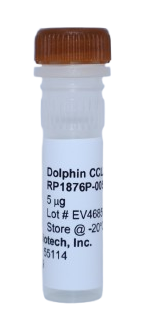
Dolphin CCL24 Recombinant Protein
- Catalog Number:
- RP1876P
- Availability:
- In stock
- Application:
- Cell Culture, Control, ELISA, ELISpot Control, Western Blot Control
- 100% Homology:
- Monodon monoceros (narwhal), Tursiops truncatus (bottlenose dolphin)
 Powered by Bioz
 - Dolphin CCL24 (Eotaxin-2) (catalog RP1876P) is a yeast-derived chemokine supplied lyophilized without carrier protein in 10% trehalose; it has no affinity tags and is naturally endotoxin-free, and should be reconstituted in sterile PBS that contains at least 0.1% carrier protein. The protein is ~10.6 kDa, 93 amino acids long (full sequence provided), and >98% pure by SDS-PAGE, with 100% amino-acid homology to bottlenose dolphin and narwhal. Store at -20°C (stable up to twelve months from date of receipt; working aliquots with carrier protein stable ~3 months) and avoid repeated freeze/thaw cycles. Product origin is the USA. It is commonly used to study CCL24/eotaxin-2 signaling and immune responses (including recruitment of eosinophils and roles in allergic and inflammatory processes); typical experimental uses include cell-culture stimulation and migration assays, chemotaxis and signaling studies, ELISA and neutralization assays, flow-cytometry and Western blot controls, and antibody generation/validation. Kingfisher Biotech products are supplied for research applications and are not intended for medicinal, diagnostic, or therapeutic use.
| Amino Acid Sequence | MIIPSSCCLA FISKRIPERR VINYQLSNRS VCPKAGVIFT TRKGQRFCGN PKLLWVQRYM KNLDAKQKKA SSRTRVMGAK VAVQRHPANS TFI (93) |
| Endotoxin | Naturally endotoxin-free |
| Form | Lyophilized |
| Storage Conditions | -20°C |
| Molecular Weight | 10.6 kDa |
| Purity | >98% as visualized by SDS-PAGE analysis. |
| Expression System | Yeast |
| Form | Lyophilized |
| Country Of Origin | USA |
Dolphin CCL24 (C-C motif chemokine ligand 24, also known as eotaxin-2 or MPIF-2, macrophage inflammatory protein-4) is a chemokine involved in recruitment of eosinophils and regulation of type 2 immune responses in dolphins, particularly the bottlenose dolphin (Tursiops truncatus). CCL24 primarily signals through the CCR3 receptor, promoting chemotaxis of eosinophils, basophils, and Th2 lymphocytes to sites of infection, inflammation, or tissue injury. In dolphins, CCL24 is likely produced by epithelial cells, macrophages, fibroblasts, and endothelial cells in response to type 2 cytokines such as IL-4 and IL-13, which drive eosinophil-associated immune responses. This chemokine may play roles in immune defense against parasitic infections, which are common in marine mammals and can affect the respiratory system, gastrointestinal tract, and other tissues. CCL24-mediated recruitment of eosinophils may also contribute to inflammatory responses in lung disease, skin lesions, or tissue repair following injury. However, excessive or prolonged expression of CCL24 could contribute to chronic inflammation or tissue damage associated with parasitic burden or environmental stressors such as pollutant exposure or harmful algal toxins. As dolphins are considered sentinel species for marine ecosystem health, characterization of dolphin CCL24 supports research into eosinophil-mediated immunity, host–parasite interactions, and environmental impacts on immune regulation in marine mammals.
Citations
Please choose a size to see price
RELATED MEDIA
