Slide 1 of 1 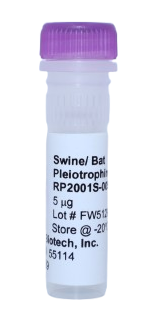
Multi-speciesd (Swine, Bat) Pleiotrophin Recombinant Protein
- Catalog Number:
- RP2001S
- Availability:
- In stock
- Application:
- Cell Culture, Control, ELISA, ELISpot Control, Western Blot Control
- 100% Homology:
- Artibeus jamaicensis (Jamaican fruit-eating bat), Desmodus rotundus (common vampire bat), Lemur catta (Ring-tailed lemur), Microcebus murinus (gray mouse lemur), Phacochoerus africanus (Common warthog), Phyllostomus discolor (pale spear-nosed bat), Phyllostomus hastatus (greater spear-nosed bat), Propithecus coquereli (Coquerel's sifaka), Sturnira hondurensis (Honduran yellow-shouldered bat), Sus scrofa (pig)
 Powered by Bioz
 - Swine/Bat PTN (Pleiotrophin) (catalog RP2001S) is a yeast-derived growth factor supplied lyophilized without carrier protein in 10% trehalose; it has no affinity tags and is naturally endotoxin-free, and should be reconstituted in sterile PBS that contains at least 0.1% carrier protein. The protein is ~15.3 kDa, 136 amino acids long (full sequence provided), and >98% pure by SDS-PAGE, with 100% amino-acid homology to pig, Jamaican fruit-eating bat, common vampire bat, Honduran yellow-shouldered bat, pale spear-nosed bat, greater spear-nosed bat, common warthog, gray mouse lemur, Coquerel's sifaka, and ring-tailed lemur. Store at -20°C (stable up to twelve months from date of receipt; working aliquots with carrier protein stable ~3 months) and avoid repeated freeze/thaw cycles. Product origin is the USA. It is commonly used to study pleiotrophin signaling and biological processes (including regulation of cell growth, differentiation, angiogenesis, and tissue repair); typical experimental uses include cell-culture stimulation and proliferation assays, growth factor and signaling studies, ELISA and neutralization assays, flow-cytometry and Western blot controls, and antibody generation/validation. Kingfisher Biotech products are supplied for research applications and are not intended for medicinal, diagnostic, or therapeutic use.
| Amino Acid Sequence | GKKEKPEKKV KKSDCGEWQW SVCVPTSGDC GLGTREGTRT GAECKQTMKT QRCKIPCNWK KQFGAECKYQ FQAWGECDLN TALKTRTGSL KRALHNADCQ KTVTISKPCG KVTKPKPQAE SKKKKKEGKK QEKMLD (136) |
| Endotoxin | Naturally endotoxin-free |
| Form | Lyophilized |
| Storage Conditions | -20°C |
| Molecular Weight | 15.3kDa |
| Purity | >98% as visualized by SDS-PAGE analysis. |
| Expression System | Yeast |
| Form | Lyophilized |
| Country Of Origin | USA |
Swine and Bat Pleiotrophin (PTN) is a secreted heparin-binding growth factor that plays important roles in cell proliferation, differentiation, angiogenesis, and tissue repair. PTN belongs to a small family of heparin-binding growth-associated proteins, which includes midkine (MK) as its closest related family member. In both swine (Sus scrofa) and bats, the pleiotrophin protein is identical at the amino acid level, indicating strong evolutionary conservation and suggesting similar biological functions across these species. PTN interacts with several cell surface receptors, including receptor protein tyrosine phosphatase beta/zeta (RPTPβ/ζ), anaplastic lymphoma kinase (ALK), and syndecans, activating signaling pathways that regulate cell migration, neurite outgrowth, angiogenesis, and extracellular matrix interactions. PTN is expressed in developing tissues, endothelial cells, macrophages, and stromal cells, where it contributes to vascular development, tissue regeneration, and immune-related processes. In swine, PTN is relevant to studies of vascular biology, tissue repair, and developmental processes, while in bats it may contribute to tissue regeneration and immune responses associated with viral tolerance and tissue homeostasis. Because pigs are widely used as large-animal models for human cardiovascular and regenerative biology, and bats are studied for their unique immune and regenerative capacities, characterization of pleiotrophin in these species supports research on angiogenesis, neural and tissue development, and conserved growth factor signaling mechanisms across mammals.
Citations
Please choose a size to see price
RELATED MEDIA
