Slide 1 of 1 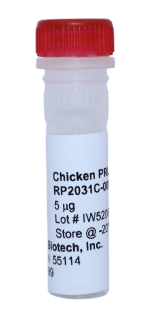
Chicken Prolactin Recombinant Protein
- Catalog Number:
- RP2031C
- Availability:
- In stock
- Application:
- Cell Culture, Control, ELISA, ELISpot Control, Western Blot Control
- 100% Homology:
- Gallus gallus (chicken), Gallus lafayettii (Ceylon junglefowl)
 Powered by Bioz
 - Chicken PRL (Prolactin) (catalog RP2031C) is a yeast-derived cytokine supplied lyophilized without carrier protein in 10% trehalose; it contains no affinity tags, is naturally endotoxin-free, and should be reconstituted in sterile PBS with at least 0.1% carrier protein. The protein is ~22.7 kDa, 198 amino acids in length (full sequence provided), and >98% pure by SDS-PAGE, with 100% amino-acid homology to chicken and Ceylon junglefowl. It is stable for up to twelve months at -20 °C from receipt, with working aliquots (with carrier protein) stable for at least ~3 months; avoid repeated freeze/thaw cycles. The product is manufactured in the USA. It is commonly used to study prolactin signaling and endocrine regulation, including roles in reproduction, lactation, and immune modulation; typical applications include receptor binding and hormone activity assays, cell-based assays, endocrine and cytokine signaling studies, ELISA and neutralization assays, flow cytometry and Western blot controls, and antibody development or validation. Kingfisher Biotech products are supplied for research applications only and are not intended for medicinal, diagnostic, or therapeutic use.
| Amino Acid Sequence | LPICPIGSVN CQVSLGELFD RAVKLSHYIH YLSSEIFNEF DERYAQGRGF ITKAVNGCHT SSLTTPEDKE QAQQIHHEDL LNLVVGVLRS WNDPLIHLAS EVQRIKEAPD TILWKAVEIE EQNKRLLEGM EKIVGRVHSG DAGNEIYSHW DGLPSLQLAD EDSRLFAFYN LLHCLRRDSH KIDNYLKVLK CRLIHDSN (198) |
| Endotoxin | Naturally endotoxin-free |
| Form | Lyophilized |
| Storage Conditions | -20°C |
| Molecular Weight | 22.7kDa |
| Purity | >98% as visualized by SDS-PAGE analysis. |
| Expression System | Yeast |
| Form | Lyophilized |
| Country Of Origin | USA |
Chicken Prolactin (PRL) is a peptide hormone belonging to the prolactin/growth hormone family, which also includes growth hormone (GH) and placental lactogen–related hormones that regulate growth, metabolism, and reproductive physiology. In chickens (Gallus gallus), prolactin is produced primarily by lactotroph cells in the anterior pituitary gland and acts through the prolactin receptor (PRLR), activating intracellular signaling pathways such as JAK2/STAT5 that regulate gene expression and physiological responses. PRL plays a central role in reproductive behavior and parental care, particularly in the regulation of broodiness, where elevated prolactin levels promote nesting behavior, incubation of eggs, and suppression of further egg laying. In addition to its reproductive functions, chicken prolactin influences immune regulation, feather development, and metabolic processes, and is expressed in several tissues including the pituitary, ovary, and immune organs. Because prolactin is a key hormonal regulator of avian reproductive cycles and parental behavior, it is widely studied in poultry science to understand broodiness control, egg production, and endocrine regulation of reproduction, providing insights important for improving reproductive management and productivity in commercial poultry systems.
Citations
Please choose a size to see price
RELATED MEDIA
