Slide 1 of 1 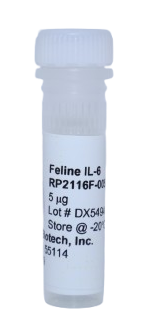
Feline IL-6 Recombinant Protein
- Catalog Number:
- RP2116F
- Availability:
- In stock
- Application:
- Cell Culture, Control, ELISA, ELISpot Control, Western Blot Control
- 100% Homology:
- Acinonyx jubatus (cheetah), Felis catus (domestic cat), Lynx canadensis (Canada lynx), Puma concolor (puma), Puma yagouaroundi (jaguarundi)
 Powered by Bioz
 - Feline IL-6 (Interleukin-6) (catalog RP2116F) is a yeast-derived cytokine supplied lyophilized without carrier protein in 10% trehalose; it contains no affinity tags, is naturally endotoxin-free, and should be reconstituted in sterile PBS with at least 0.1% carrier protein. The protein is ~20.6 kDa, 181 amino acids in length (full sequence provided), and >98% pure by SDS-PAGE, with 100% amino-acid homology to domestic cat, Canada lynx, puma, jaguarundi, and cheetah. It is stable for up to twelve months at -20 °C from receipt, with working aliquots (with carrier protein) stable for at least ~3 months; avoid repeated freeze/thaw cycles. The product is manufactured in the USA. It is commonly used to study IL-6 signaling and inflammatory responses, including regulation of immune activation, acute phase response, and cytokine signaling pathways; typical applications include cell-based assays, cytokine signaling studies, inflammation research, ELISA and neutralization assays, flow cytometry and Western blot controls, and antibody development or validation. Kingfisher Biotech products are supplied for research applications only and are not intended for medicinal, diagnostic, or therapeutic use.
| Amino Acid Sequence | TPGPLGGDAT SNRLPLTSAD KMEELIKYIL GKISALKKEM CDNYNKCEDS KEALAENNLN LPKLAEKDGC FQSGFNQETC LTRITTGLQE FQIYLKFLQD KYEGDKENAK SVYTSTNVLL QMLKRKGKNQ DEVTIPVPTV EVGLQAKLQS QEEWLRHTTI HLTLRRLEDF LQFSLRAVRI M (181) |
| Endotoxin | Naturally endotoxin-free |
| Form | Lyophilized |
| Storage Conditions | -20°C |
| Molecular Weight | 20.6kDa |
| Purity | >98% as visualized by SDS-PAGE analysis. |
| Expression System | Yeast |
| Form | Lyophilized |
| Country Of Origin | USA |
Feline Interleukin-6 (IL-6) is a multifunctional pro-inflammatory cytokine and a central member of the IL-6 cytokine family, which includes IL-6, IL-11, IL-27, IL-31, leukemia inhibitory factor (LIF), oncostatin M (OSM), ciliary neurotrophic factor (CNTF), cardiotrophin-1 (CT-1), and cardiotrophin-like cytokine factor 1 (CLCF1), all of which signal through receptor complexes that utilize the shared gp130 subunit. In cats (Felis catus), IL-6 plays a critical role in regulating acute-phase protein production, hematopoiesis, B- and T-cell differentiation, and systemic inflammatory responses via the IL-6R/gp130-mediated JAK/STAT pathway. Dysregulation of IL-6 and related family members contributes to the pathogenesis of infectious diseases such as feline infectious peritonitis (FIP) and feline immunodeficiency virus (FIV), as well as chronic inflammatory conditions, immune-mediated disorders, and certain neoplasms. Elevated IL-6 levels are associated with fever, increased serum amyloid A production, and disease severity, making it a valuable biomarker for inflammation and treatment monitoring in veterinary medicine. In animal model research, characterization of feline IL-6 and its related cytokine family members supports investigation of cytokine-driven pathology, immune signaling networks, and host-pathogen interactions, while also enhancing comparative and translational studies, as naturally occurring feline diseases provide important models for understanding IL-6 family-mediated mechanisms relevant to human inflammatory and infectious diseases.
Citations
Please choose a size to see price
RELATED MEDIA
