Slide 1 of 1 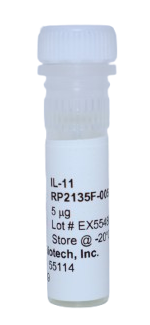
Multi-species (Canine, Feline, Ferret, Mink) IL-11 Recombinant Protein
- Catalog Number:
- RP2135F
- Availability:
- In stock
- Application:
- Cell Culture, Control, ELISA, ELISpot Control, Western Blot Control
- 100% Homology:
- Acinonyx jubatus (cheetah), Ailuropoda melanoleuca (giant panda), Callorhinus ursinus (northern fur seal), Canis lupus dingo (dingo), Canis lupus familiaris (dog), Felis catus (domestic cat), Gulo gulo luscus (American wolverine), Leopardus geoffroyi (Geoffroy's cat), Lutra lutra (Eurasian river otter), Lynx canadensis (Canada lynx), Lynx rufus (bobcat), Mustela erminea (ermine), Mustela putorius furo (domestic ferret), Neogale vison (American mink), Odobenus rosmarus divergens (Pacific walrus), Panthera leo (lion), Panthera pardus (leopard), Panthera tigris (tiger), Panthera uncia (snow leopard), Puma concolor (puma), Puma yagouaroundi (jaguarundi), Vulpes vulpes (red fox), Zalophus californianus (California sea lion)
 Powered by Bioz
 - IL-11 (Interleukin-11) (catalog RP2135F) is a yeast-derived cytokine supplied lyophilized without carrier protein in 10% trehalose; it contains no affinity tags, is naturally endotoxin-free, and should be reconstituted in sterile PBS with at least 0.1% carrier protein. The protein is ~19.1 kDa, 179 amino acids in length (full sequence provided), and >98% pure by SDS-PAGE, with 100% amino-acid homology to dog, domestic cat, ferret, mink, cheetah, giant panda, northern fur seal, dingo, American wolverine, Geoffroy's cat, Eurasian river otter, Canada lynx, bobcat, ermine, Pacific walrus, lion, leopard, tiger, snow leopard, puma, jaguarundi, red fox, and California sea lion. It is stable for up to twelve months at -20 °C from receipt, with working aliquots (with carrier protein) stable for at least ~3 months; avoid repeated freeze/thaw cycles. The product is manufactured in the USA. It is commonly used to study IL-11 signaling and biological processes, including hematopoiesis, inflammation, and cytokine-mediated cellular responses; typical applications include cell-based assays, cytokine signaling studies, hematopoietic research, ELISA and neutralization assays, flow cytometry and Western blot controls, and antibody development or validation. Kingfisher Biotech products are supplied for research applications only and are not intended for medicinal, diagnostic, or therapeutic use.
| Amino Acid Sequence | APGPPPGPPR ASPDPRAELD SAVLLTRSLL ADTRQLAAQL RDKFPADGDH NLDSLPTLAM SAGALGALQL PGVLTRLRAD LFSYLRHVQW LRRAGGPSLR TLEPELGALQ ARLDRLLRRL QLLMSRLALP QAPPDPPAPP LAPPASAWGG IRAAHAILGG LHLTLDWAVR GLLLLKTRL (179) |
| Endotoxin | Naturally endotoxin-free |
| Form | Lyophilized |
| Storage Conditions | -20°C |
| Molecular Weight | 19.1kDa |
| Purity | >98% as visualized by SDS-PAGE analysis. |
| Expression System | Yeast |
| Form | Lyophilized |
| Country Of Origin | USA |
Canine, Feline, Ferret, and Mink Interleukin-11 (IL-11) is a highly conserved cytokine that is identical at the protein level among dogs (Canis lupus familiaris), cats (Felis catus), ferrets (Mustela putorius furo), and mink (Neovison vison), reflecting strong evolutionary conservation within Carnivora. IL-11 is a member of the IL-6 cytokine family—which includes IL-6, IL-11, IL-27, IL-31, leukemia inhibitory factor (LIF), oncostatin M (OSM), ciliary neurotrophic factor (CNTF), cardiotrophin-1 (CT-1), and cardiotrophin-like cytokine factor 1 (CLCF1)—and signals through a receptor complex composed of IL-11Rα and the shared gp130 subunit, activating JAK/STAT3 and MAPK pathways. Functionally, IL-11 plays roles in hematopoiesis (particularly megakaryocyte maturation and platelet production), mucosal protection, epithelial cell survival, and regulation of inflammatory responses. In these carnivore species, IL-11 is implicated in gastrointestinal inflammation, tissue repair, reproductive biology, and potentially tumor progression, where dysregulated IL-11/STAT3 signaling may contribute to fibrosis or neoplasia. Because dogs and cats serve as important spontaneous models for human cancer, inflammatory bowel disease, and regenerative medicine research, and ferrets and mink are widely used in respiratory viral and infectious disease models, the conserved nature of IL-11 across these species supports cross-species reagent development and comparative studies of cytokine signaling, tissue repair mechanisms, and translational therapeutic targeting of the IL-11/gp130 pathway.
Citations
Please choose a size to see price
RELATED MEDIA
