Slide 1 of 1 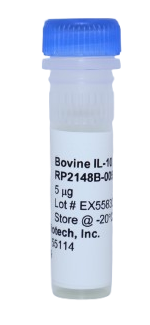
Bovine IL-10 Recombinant Protein
- Catalog Number:
- RP2148B
- Availability:
- In stock
- Application:
- Cell Culture, Control, ELISA, ELISpot Control, Western Blot Control
- 100% Homology:
- Bos taurus (cattle)
 Powered by Bioz
 - Bovine IL-10 (Interleukin-10) (catalog RP2148B) is a yeast-derived cytokine supplied lyophilized without carrier protein in 10% trehalose; it contains no affinity tags, is naturally endotoxin-free, and should be reconstituted in sterile PBS with at least 0.1% carrier protein. The protein is ~18.6 kDa, 160 amino acids in length (full sequence provided), and >98% pure by SDS-PAGE, with 100% amino-acid homology to cattle. It is stable for up to twelve months at -20 °C from receipt, with working aliquots (with carrier protein) stable for at least ~3 months; avoid repeated freeze/thaw cycles. The product is manufactured in the USA. It is commonly used to study IL-10 signaling and immune regulation, particularly anti-inflammatory responses, cytokine suppression, and immune homeostasis; typical applications include cell-based assays, cytokine signaling studies, immunology research, ELISA and neutralization assays, flow cytometry and Western blot controls, and antibody development or validation. Kingfisher Biotech products are supplied for research applications only and are not intended for medicinal, diagnostic, or therapeutic use.
| Amino Acid Sequence | SRDASTLSDS SCIHLPTSLP HMLRELRAAF GKVKTFFQMK DQLHSLLLTQ SLLDDFKGYL GCQALSEMIQ FYLEEVMPQA ENHGPDIKEH VNSLGEKLKT LRLHLRRCHR FLPCENKSKA VEKVKRVFSE LQERGVYKAM SEFDIFINYI ETYMTTKMQK (160) |
| Endotoxin | Naturally endotoxin-free |
| Form | Lyophilized |
| Storage Conditions | -20°C |
| Molecular Weight | 18.6kDa |
| Purity | >98% as visualized by SDS-PAGE analysis. |
| Expression System | Yeast |
| Form | Lyophilized |
| Country Of Origin | USA |
Bovine Interleukin-10 (IL-10) is a potent anti-inflammatory cytokine produced primarily by regulatory T cells (Tregs), Th2 cells, macrophages, dendritic cells, and certain B-cell subsets in cattle (Bos taurus), where it plays a central role in limiting excessive immune activation and maintaining immune homeostasis. IL-10 signals through the IL-10 receptor complex (IL-10R1/IL-10R2), activating JAK/STAT3 pathways that suppress pro-inflammatory cytokine production (including IL-1β, TNF-α, and IL-12), reduce antigen presentation capacity, and downregulate Th1-type immune responses. In bovine health, IL-10 is critically involved in modulating immune responses during chronic and economically significant infections such as bovine viral diarrhea virus (BVDV), Mycobacterium avium subsp. paratuberculosis (Johne’s disease), Mycobacterium bovis (bovine tuberculosis), mastitis, and parasitic infections, where elevated IL-10 expression can contribute to immune suppression and pathogen persistence. While IL-10 helps prevent tissue damage from excessive inflammation, dysregulated or sustained IL-10 production may impair protective cell-mediated immunity. As a biomarker of immune regulation, bovine IL-10 is important in vaccine evaluation, disease progression studies, and assessment of Th1/Th2 immune balance. In veterinary and comparative research, characterization of bovine IL-10 supports investigations into host–pathogen interactions, immune tolerance mechanisms, chronic infection dynamics, and development of immunomodulatory strategies to improve cattle health, productivity, and disease resilience.
Citations
Please choose a size to see price
RELATED MEDIA
