Slide 1 of 1 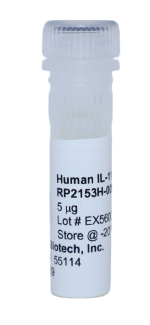
Human IL-11 Recombinant Protein
- Catalog Number:
- RP2153H
- Availability:
- In stock
- Application:
- Cell Culture, Control, ELISA, ELISpot Control, Western Blot Control
- 100% Homology:
- Gorilla gorilla gorilla (western lowland gorilla), Homo sapiens (human), Hylobates moloch (silvery gibbon), Nomascus leucogenys (northern white-cheeked gibbon), Pan paniscus (pygmy chimpanzee), Pan troglodytes (chimpanzee), Pongo abelii (Sumatran orangutan), Pongo pygmaeus (Bornean orangutan)
 Powered by Bioz
 - Human IL-11 (Interleukin-11) (catalog RP2153H) is a yeast-derived cytokine supplied lyophilized without carrier protein in 10% trehalose; it contains no affinity tags, is naturally endotoxin-free, and should be reconstituted in sterile PBS with at least 0.1% carrier protein. The protein is ~18.4 kDa, 170 amino acids in length (full sequence provided), and >98% pure by SDS-PAGE, with 100% amino-acid homology to human, western lowland gorilla, chimpanzee, pygmy chimpanzee, Sumatran orangutan, Bornean orangutan, northern white-cheeked gibbon, and silvery gibbon. It is stable for up to twelve months at -20 °C from receipt, with working aliquots (with carrier protein) stable for at least ~3 months; avoid repeated freeze/thaw cycles. The product is manufactured in the USA. It is commonly used to study IL-11 signaling and biological processes, including hematopoiesis, inflammation, and cytokine-mediated cellular responses; typical applications include cell-based assays, cytokine signaling studies, hematopoietic research, ELISA and neutralization assays, flow cytometry and Western blot controls, and antibody development or validation. Kingfisher Biotech products are supplied for research applications only and are not intended for medicinal, diagnostic, or therapeutic use.
| Amino Acid Sequence | RVSPDPRAEL DSTVLLTRSL LADTRQLAAQ LRDKFPADGD HNLDSLPTLA MSAGALGALQ LPGVLTRLRA DLLSYLRHVQ WLRRAGGSSL KTLEPELGTL QARLDRLLRR LQLLMSRLAL PQPPPDPPAP PLAPPSSAWG GIRAAHAILG GLHLTLDWAV RGLLLLKTRL (170) |
| Endotoxin | Naturally endotoxin-free |
| Form | Lyophilized |
| Storage Conditions | -20°C |
| Molecular Weight | 18.4kDa |
| Purity | >98% as visualized by SDS-PAGE analysis. |
| Expression System | Yeast |
| Form | Lyophilized |
| Country Of Origin | USA |
Human Interleukin-11 (IL-11) is a multifunctional cytokine belonging to the IL-6 family—which includes IL-6, IL-11, IL-27, IL-31, leukemia inhibitory factor (LIF), oncostatin M (OSM), ciliary neurotrophic factor (CNTF), cardiotrophin-1 (CT-1), and cardiotrophin-like cytokine factor 1 (CLCF1)—all of which signal through receptor complexes containing the shared gp130 subunit. IL-11 binds to its specific receptor IL-11Rα, forming a complex with gp130 that activates JAK/STAT3 and MAPK signaling pathways to regulate gene expression. In humans, IL-11 plays important roles in hematopoiesis, particularly in promoting megakaryocyte maturation and platelet production, as well as in mucosal protection, epithelial regeneration, reproductive biology, and modulation of inflammatory responses. Clinically, recombinant human IL-11 (oprelvekin) has been used to treat chemotherapy-induced thrombocytopenia. However, dysregulated IL-11 signaling has been increasingly implicated in fibrotic diseases (including cardiac, pulmonary, and hepatic fibrosis), gastrointestinal inflammation, and tumor progression, where IL-11–driven STAT3 activation can promote stromal remodeling and cancer cell survival. As both a therapeutic agent and emerging therapeutic target, human IL-11 is central to research on hematologic support, fibrosis biology, inflammatory disease, and oncogenic signaling pathways.
Citations
Please choose a size to see price
RELATED MEDIA
