Slide 1 of 1 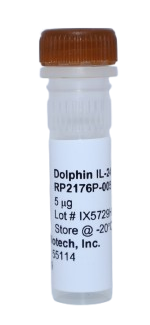
Dolphin IL-24 Recombinant Protein
- Catalog Number:
- RP2176P
- Availability:
- In stock
- Application:
- Cell Culture, Control, ELISA, ELISpot Control, Western Blot Control
- 100% Homology:
- Tursiops truncatus (common bottlenose dolphin)
 Powered by Bioz
 - Dolphin IL-24 (Interleukin-24) (catalog RP2176P) is a yeast-derived cytokine supplied lyophilized without carrier protein in 10% trehalose; it contains no affinity tags, is naturally endotoxin-free, and should be reconstituted in sterile PBS with at least 0.1% carrier protein. The protein is ~18.1 kDa, 155 amino acids in length (full sequence provided), and >98% pure by SDS-PAGE, with 100% amino-acid homology to common bottlenose dolphin. It is stable for up to twelve months at -20 °C from receipt, with working aliquots (with carrier protein) stable for ~3 months; avoid repeated freeze/thaw cycles. The product is manufactured in the USA. It is commonly used to study IL-24 signaling and immune regulation, including roles in inflammation, apoptosis, and cytokine-mediated cellular responses; typical applications include cell-based assays, cytokine signaling studies, immunology research, ELISA and neutralization assays, flow cytometry and Western blot controls, and antibody development or validation. Kingfisher Biotech products are supplied for research applications only and are not intended for medicinal, diagnostic, or therapeutic use.
| Amino Acid Sequence | QEFQFGPCQV EGVVLQELWE AFQAMKDIVQ AQDNITSVQL LRKEVLQNVS EAESCYLIHA LLEFYLNTVF KNYHDKAVEF RILKSFSTLA NNFIVIVSKL QPSQEKEMFS ISESARRRFL LFQRAFKQLD REAAVTKAFG EVDILLTWME KFYQI (155) |
| Endotoxin | Naturally endotoxin-free |
| Form | Lyophilized |
| Storage Conditions | -20°C |
| Molecular Weight | 18.1kDa |
| Purity | >98% as visualized by SDS-PAGE analysis. |
| Expression System | Yeast |
| Form | Lyophilized |
| Country Of Origin | USA |
Dolphin interleukin-24 (IL-24) is a member of the IL-10 cytokine family—which includes IL-10, IL-19, IL-20, IL-22, and IL-26—and is expected to function similarly to other mammalian IL-24 homologs in regulating immune responses, epithelial biology, inflammation, and tumor-related pathways through IL-20 receptor–mediated JAK/STAT signaling. In dolphin health, IL-24 and related IL-10 family cytokines likely contribute to maintaining mucosal and skin barrier integrity, modulating inflammatory responses to marine pathogens, and balancing immune activation in conditions such as dermatitis, wound healing complications, respiratory infections, and gastrointestinal inflammation commonly observed in managed and wild cetacean populations. Given increasing reports of neoplasia in dolphins, IL-24 may also have relevance in tumor surveillance and anti-tumor immune regulation, paralleling its studied roles in human cancers including melanoma, lymphoma, colorectal, lung, pancreatic, and breast cancers. As marine mammals share conserved immune architecture with other mammals while exhibiting unique adaptations to aquatic environments, dolphin IL-24 provides value both for advancing cetacean veterinary care and for comparative immunology research, offering insight into immune regulation, inflammatory disease, and cancer biology across species.
Citations
5 ug
Price: $170.00
RELATED MEDIA
