Slide 1 of 1 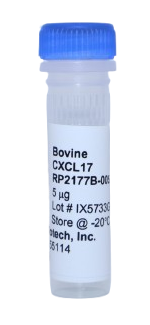
Bovine CXCL17 Recombinant Protein
- Catalog Number:
- RP2177B
- Availability:
- In stock
- Application:
- Cell Culture, Control, ELISA, ELISpot Control, Western Blot Control
- 100% Homology:
- Bos taurus (cattle)
 Powered by Bioz
 - Bovine CXCL17 (C-X-C Motif Chemokine Ligand 17) (catalog RP2177B) is a yeast-derived cytokine supplied lyophilized without carrier protein in 10% trehalose; it contains no affinity tags, is naturally endotoxin-free, and should be reconstituted in sterile PBS with at least 0.1% carrier protein. The protein is ~11.2 kDa, 96 amino acids in length (full sequence provided), and >98% pure by SDS-PAGE, with 100% amino-acid homology to cattle. It is stable for up to twelve months at -20 °C from receipt, with working aliquots (with carrier protein) stable for ~3 months; avoid repeated freeze/thaw cycles. The product is manufactured in the USA. It is commonly used to study chemokine-mediated immune responses, including roles in mucosal immunity, macrophage recruitment, and antimicrobial defense; typical applications include chemotaxis and cell migration assays, immune cell activation studies, cytokine signaling research, ELISA and neutralization assays, flow cytometry and Western blot controls, and antibody development or validation. Kingfisher Biotech products are supplied for research applications only and are not intended for medicinal, diagnostic, or therapeutic use.
| Amino Acid Sequence | SSHTGVARGQ RDQRQASGRW LREGGQECEC QDWFLRAPRR TLMAAPRLTK PCPCDHFKGR MKKTRHQRHH RKSNKPSRAC QQFLTRCLLE SFALPL (96) |
| Endotoxin | Naturally endotoxin-free |
| Form | Lyophilized |
| Storage Conditions | -20°C |
| Molecular Weight | 11.2kDa |
| Purity | >98% as visualized by SDS-PAGE analysis. |
| Expression System | Yeast |
| Form | Lyophilized |
| Country Of Origin | USA |
Bovine CXCL17 (C-X-C motif chemokine ligand 17), also known as DMC (dendritic cell and monocyte chemokine), is a mucosal chemokine belonging to the CXC chemokine family that plays an important role in innate immune defense and recruitment of myeloid immune cells at mucosal surfaces. In cattle (Bos taurus), CXCL17 is primarily produced by epithelial cells of mucosal tissues, including those in the respiratory tract, gastrointestinal tract, and other barrier surfaces, where it contributes to immune surveillance and early responses to microbial exposure. CXCL17 acts as a chemoattractant for monocytes, macrophages, and dendritic cells, helping recruit these cells to mucosal tissues where they participate in pathogen detection, antigen presentation, and initiation of immune responses. In bovine health, CXCL17 likely contributes to protection against respiratory and enteric pathogens, including those associated with bovine respiratory disease complex and gastrointestinal infections, by promoting immune cell accumulation and antimicrobial activity at epithelial barriers. Because mucosal immunity is critical for defense against pathogens encountered in the environment, bovine CXCL17 is studied in veterinary immunology, respiratory disease research, and host–pathogen interaction studies to better understand chemokine-mediated immune cell recruitment and barrier immunity in cattle.
Citations
5 ug
Price: $170.00
RELATED MEDIA
