Slide 1 of 1 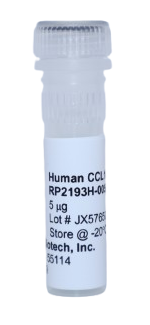
Human CCL16 Recombinant Protein
- Catalog Number:
- RP2193H
- Availability:
- In stock
- Application:
- Cell Culture, Control, ELISA, ELISpot Control, Western Blot Control
- 100% Homology:
- Gorilla gorilla gorilla (western lowland gorilla), Homo sapiens (human), Pan paniscus (pygmy chimpanzee), Pan troglodytes (chimpanzee)
 Powered by Bioz
 - Human CCL16 (C-C Motif Chemokine Ligand 16) (catalog RP2193H) is a yeast-derived cytokine supplied lyophilized without carrier protein in 10% trehalose; it contains no affinity tags, is naturally endotoxin-free, and should be reconstituted in sterile PBS with at least 0.1% carrier protein. The protein is ~11.2 kDa, 97 amino acids in length (full sequence provided), and >98% pure by SDS-PAGE, with 100% amino-acid homology to human, western lowland gorilla, pygmy chimpanzee, and chimpanzee. It is stable for up to twelve months at -20 °C from receipt, with working aliquots (with carrier protein) stable for at least ~3 months; avoid repeated freeze/thaw cycles. The product is manufactured in the USA. It is commonly used to study chemokine-mediated immune responses, particularly monocyte and lymphocyte recruitment, inflammation, and cytokine signaling pathways; typical applications include chemotaxis and cell migration assays, immune cell activation studies, cytokine signaling research, ELISA and neutralization assays, flow cytometry and Western blot controls, and antibody development or validation. Kingfisher Biotech products are supplied for research applications only and are not intended for medicinal, diagnostic, or therapeutic use.
| Amino Acid Sequence | QPKVPEWVNT PSTCCLKYYE KVLPRRLVVG YRKALNCHLP AIIFVTKRNR EVCTNPNDDW VQEYIKDPNL PLLPTRNLST VKIITAKNGQ PQLLNSQ (97) |
| Endotoxin | Naturally endotoxin-free |
| Form | Lyophilized |
| Storage Conditions | -20°C |
| Molecular Weight | 11.2kDa |
| Purity | >98% as visualized by SDS-PAGE analysis. |
| Expression System | Yeast |
| Form | Lyophilized |
| Country Of Origin | USA |
Human CCL16 (C-C motif chemokine ligand 16), also known as liver-expressed chemokine (LEC) or HCC-4, is a member of the CC chemokine family involved in leukocyte recruitment and regulation of inflammatory responses. CCL16 is constitutively expressed at relatively high levels in the liver and is produced primarily by hepatocytes, with additional expression by monocytes, macrophages, and certain epithelial and stromal cells under inflammatory conditions. It signals mainly through chemokine receptors CCR1, CCR2, and CCR5 to promote chemotaxis and activation of monocytes, lymphocytes, and other immune effector cells. Unlike many chemokines, human CCL16 is detectable in circulation at baseline, contributing to immune surveillance and hepatic immune homeostasis. Expression may increase during systemic inflammation, chronic liver disease, viral hepatitis, metabolic liver disorders, and certain malignancies. In clinical and translational research, human CCL16 is studied as a mediator of mononuclear cell recruitment and as a potential biomarker of hepatic inflammation, chronic inflammatory states, and tumor-associated immune responses.
Citations
Please choose a size to see price
RELATED MEDIA
