Slide 1 of 1 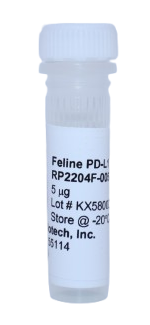
Feline PD-L1 Recombinant Protein
- Catalog Number:
- RP2204F
- Application:
- Cell Culture, Control, ELISA, ELISpot Control, Western Blot Control
- 100% Homology:
- Acinonyx jubatus (cheetah), Felis catus (domestic cat), Lynx canadensis (Canada lynx), Lynx rufus (bobcat), Puma concolor (puma)
 Powered by Bioz
 - Feline PD-L1 (Programmed Death-Ligand 1) (catalog RP2204F) is a yeast-derived protein supplied lyophilized without carrier protein in 10% trehalose; it contains no affinity tags, is naturally endotoxin-free, and should be reconstituted in sterile PBS with at least 0.1% carrier protein. The protein is ~24.6 kDa, 219 amino acids in length (full sequence provided), and >98% pure by SDS-PAGE, with 100% amino-acid homology to domestic cat, cheetah, Canada lynx, bobcat, and puma. It is stable for up to twelve months at -20 °C from receipt, with working aliquots (with carrier protein) stable for at least ~3 months; avoid repeated freeze/thaw cycles. The product is manufactured in the USA. It is commonly used to study immune checkpoint regulation and PD-1/PD-L1 signaling, including roles in immune inhibition, tumor immune evasion, and T-cell function; typical applications include receptor-ligand interaction studies, immune signaling assays, cell-based assays, ELISA and binding assays, flow cytometry and Western blot controls, and antibody development or validation. Kingfisher Biotech products are supplied for research applications only and are not intended for medicinal, diagnostic, or therapeutic use.
| Amino Acid Sequence | FTITVSKDLY VVEYGSNVTM ECRFPVEEQL DLVSLIVYWE MEDKKIIQFV QGKEDLKVQH RSYSQRAQLL KDQLFLGKAA LQITNVTLED AGVYCCLIGY GGADYKRITL KVHAPYRKIN QRISVDPVTS EHELMCQAEG YPTAEVIWTN SAHQVLNGKT IISVSNMETK LFNVTSTLRI NTTANEIFYC TFLQRSSPEG NSTAELVIPE PFLVPANER (219) |
| Endotoxin | Naturally endotoxin-free |
| Form | Lyophilized |
| Storage Conditions | -20°C |
| Molecular Weight | 24.6kDa |
| Purity | >98% as visualized by SDS-PAGE analysis. |
| Affinity Tag | None |
| aminoAcids | 219 |
| Carrier Protein | None |
| Expression System | Yeast |
| Form | Lyophilized |
| Country Of Origin | USA |
Feline Programmed Death-Ligand 1 (PD-L1) (also known as CD274 or B7-H1) is an immune checkpoint protein that plays a key role in regulating T cell activation and immune tolerance in cats (Felis catus). PD-L1 is expressed on antigen-presenting cells, macrophages, dendritic cells, epithelial cells, and some tumor cells, and interacts with its receptor PD-1 (Programmed Death-1, CD279) on activated T lymphocytes. Binding of PD-L1 to PD-1 delivers inhibitory signals that suppress T cell proliferation, cytokine production, and cytotoxic activity, helping to maintain immune homeostasis and prevent excessive inflammatory responses. In feline health, PD-L1 expression has been observed in several feline cancers, including oral squamous cell carcinoma, mammary carcinoma, and lymphoma, where tumor-associated PD-L1 expression can contribute to immune evasion by inhibiting anti-tumor T cell responses. PD-L1 signaling may also play roles in chronic infections and inflammatory diseases where regulation of immune activation is required to limit tissue damage. Because immune checkpoint pathways are increasingly important therapeutic targets in oncology, feline PD-L1 is an emerging focus in comparative cancer research and veterinary immunotherapy, contributing to studies aimed at developing checkpoint inhibitor strategies and understanding tumor–immune system interactions in cats.
- Ig Superfamily
Citations
Please choose a size to see price
RELATED MEDIA
