Slide 1 of 1 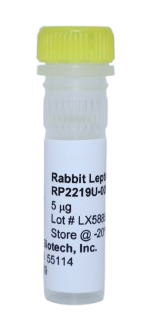
Rabbit Leptin Recombinant Protein
- Catalog Number:
- RP2219U
- Availability:
- In stock
- Application:
- Cell Culture, Control, ELISA, ELISpot Control, Western Blot Control
- 100% Homology:
- Oryctolagus cuniculus (rabbit)
 Powered by Bioz
 - Rabbit Leptin (catalog RP2219U) is a yeast-derived cytokine supplied lyophilized without carrier protein in 10% trehalose; it contains no affinity tags, is naturally endotoxin-free, and should be reconstituted in sterile PBS with at least 0.1% carrier protein. The protein is ~15.9 kDa, 146 amino acids in length (full sequence provided), and >98% pure by SDS-PAGE, with 100% amino-acid homology to rabbit. It is stable for up to twelve months at -20 °C from receipt, with working aliquots (with carrier protein) stable for ~3 months; avoid repeated freeze/thaw cycles. The product is manufactured in the USA. It is commonly used to study leptin signaling and metabolic regulation, including roles in appetite control, energy homeostasis, and endocrine function; typical applications include cell-based assays, metabolic studies, hormone signaling research, ELISA and binding assays, flow cytometry and Western blot controls, and antibody development or validation. Kingfisher Biotech products are supplied for research applications only and are not intended for medicinal, diagnostic, or therapeutic use.
| Amino Acid Sequence | VPMRKVQDDT KTLIKTIVTR ISDISHTQSV SSRQRVVGLD FIPGLHPNLS LSTMDQTLAI YQQILASLPS RNVIQIANDL ENLRDLLHLL ASSKSCPLPR ASGLETLEGL GGVLEASLYS TEVVALSRLQ GFLQAMLQQL DLGPGC (146) |
| Endotoxin | Naturally endotoxin-free |
| Form | Lyophilized |
| Storage Conditions | -20°C |
| Molecular Weight | 15.9kDa |
| Purity | >98% as visualized by SDS-PAGE analysis. |
| Expression System | Yeast |
| Form | Lyophilized |
| Country Of Origin | USA |
Rabbit Leptin is a peptide hormone that plays a key role in regulating energy balance, metabolism, and endocrine function in rabbits (Oryctolagus cuniculus). Leptin is produced primarily by adipocytes in adipose tissue and circulates in the bloodstream to signal nutritional status to the central nervous system. Rabbit leptin binds to the leptin receptor (LEPR), a member of the class I cytokine receptor family, activating intracellular signaling pathways including JAK–STAT, PI3K–AKT, and MAPK that regulate appetite, energy expenditure, and metabolic homeostasis. Through these pathways, leptin helps control food intake, body weight, lipid metabolism, and glucose regulation. In rabbits, leptin is also involved in reproductive physiology, immune regulation, and developmental processes. In cell culture, recombinant rabbit leptin is commonly used to stimulate leptin receptor signaling in neuronal, adipocyte, and immune cell models to study mechanisms of metabolic regulation and hormone signaling. Rabbit leptin is also studied in animal models of obesity, metabolic syndrome, and reproductive biology, where rabbit models help researchers investigate leptin-mediated control of appetite, adipose tissue function, and metabolic disease relevant to human physiology.
Citations
Please choose a size to see price
RELATED MEDIA
