Slide 1 of 1 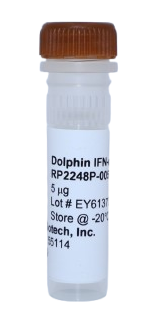
Dolphin IFN alpha Recombinant Protein
- Catalog Number:
- RP2248P
- Availability:
- In stock
- Application:
- Cell Culture, Control, ELISA, ELISpot Control, Western Blot Control
- 100% Homology:
- Tursiops truncatus (common bottlenose dolphin)
 Powered by Bioz
 - Dolphin IFN-α (Interferon Alpha) (catalog RP2248P) is a yeast-derived cytokine supplied lyophilized without carrier protein in 10% trehalose; it contains no affinity tags, is naturally endotoxin-free, and should be reconstituted in sterile PBS with at least 0.1% carrier protein. The protein is ~18.1 kDa, 158 amino acids in length (full sequence provided), and >98% pure by SDS-PAGE, with 100% amino-acid homology to common bottlenose dolphin. It is stable for up to twelve months at -20 °C from receipt, with working aliquots (with carrier protein) stable for ~3 months; avoid repeated freeze/thaw cycles. The product is manufactured in the USA. It is commonly used to study interferon signaling and antiviral immune responses, including roles in innate immunity, viral defense, and cytokine-mediated signaling pathways; typical applications include antiviral assays, cell-based assays, cytokine signaling studies, ELISA and neutralization assays, flow cytometry and Western blot controls, and antibody development or validation. Kingfisher Biotech products are supplied for research applications only and are not intended for medicinal, diagnostic, or therapeutic use.
| Amino Acid Sequence | CDLPQTHSLA KTRALMLLRQ MRRISPFSCL KDRNDFGFPQ EAFGGNQFQK AQAIAVVHEM IQQTFQLFST EGSAAAWDET LLDKFCTALY QQLTDLQACL MQEAGLEGTP LLKEDSILAV RKYFHRITVY LQEKKYSPCA WEIVRAEVMR SFSSSRNL (158) |
| Endotoxin | Naturally endotoxin-free |
| Form | Lyophilized |
| Storage Conditions | -20°C |
| Molecular Weight | 18.1 kDa |
| Purity | >98% as visualized by SDS-PAGE analysis. |
| Expression System | Yeast |
| Form | Lyophilized |
| Country Of Origin | USA |
Dolphin Interferon-Alpha (IFN-α) is a type I interferon produced by virus-infected cells and plasmacytoid dendritic cell–like populations in dolphins, particularly the bottlenose dolphin (Tursiops truncatus), where it plays a central role in innate antiviral immunity. Upon binding to the type I interferon receptor complex (IFNAR1/IFNAR2), dolphin IFN-α activates JAK/STAT signaling pathways, leading to induction of interferon-stimulated genes (ISGs) that inhibit viral replication, enhance antigen presentation, and promote activation of natural killer (NK) cells and adaptive immune responses. IFN-α is upregulated in response to viral infections documented in dolphins, including cetacean morbillivirus, herpesvirus, papillomavirus, and other emerging marine pathogens, and serves as an important biomarker of antiviral immune activation. Dysregulation of type I interferon responses may contribute to immunopathology or altered susceptibility under environmental stress conditions such as pollutant exposure or harmful algal blooms. In marine mammal health research, characterization of dolphin IFN-α supports studies of host–virus interactions, immune adaptation to aquatic environments, and conservation medicine. Additionally, dolphins serve as sentinel species for ocean ecosystem health, and investigation of IFN-α responses provides comparative insight into antiviral immunity, environmental immunotoxicology, and type I interferon biology relevant to both wildlife conservation and human infectious disease research.
Citations
Please choose a size to see price
RELATED MEDIA
