Slide 1 of 1 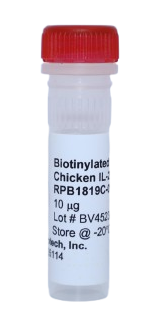
Chicken IL-2 Biotinylated Recombinant Protein
- Catalog Number:
- RPB1819C
- Availability:
- In stock
- Application:
- Cell Culture
- 100% Homology:
- Gallus gallus (chicken)
- Label:
- Biotin
 Powered by Bioz
 - The Chicken IL-2 Biotinylated yeast-derived recombinant protein is not tagged and is naturally endotoxin-free. The purity is greater than 98% as visualized by SDS-PAGE analysis. Chicken IL-2 Biotinylated applications are for cell culture. Chicken IL-2 Biotinylated yeast-derived recombinant protein can be purchased in multiple sizes. Chicken IL-2 Biotinylated Specifications: (Molecular Weight: 14.0 kDa) (Amino Acid Sequence: ASLSSAKRKPLQTLIKDLEILENIKNKIHLELYTPTETQECTQQTLQCYLGEVVTLKKETEDDTEIKEEFVTAIQNIEKNLKSLTGLNHTGSECKICEANNKKKFPDFLHELTNFVRYLQK) (Gene ID: 373958). For research use only.
| Amino Acid Sequence | ASLSSAKRKP LQTLIKDLEI LENIKNKIHL ELYTPTETQE CTQQTLQCYL GEVVTLKKET EDDTEIKEEF VTAIQNIEKN LKSLTGLNHT GSECKICEAN NKKKFPDFLH ELTNFVRYLQ K (121) |
| Endotoxin | Naturally endotoxin-free |
| Form | Lyophilized |
| Storage Conditions | -20°C |
| Purity | >98% as visualized by SDS-PAGE analysis. |
| Expression System | Yeast |
| Form | Lyophilized |
| Country Of Origin | USA |
Chicken IL-2 (Interleukin-2) is a key T cell–derived cytokine that regulates lymphocyte proliferation, differentiation, and immune homeostasis in chickens (Gallus gallus). IL-2 is produced primarily by activated CD4⁺ and CD8⁺ T lymphocytes following antigen recognition and costimulatory signaling, and it functions through the IL-2 receptor complex (IL-2Rα/CD25, IL-2Rβ, and the common γ chain) to promote clonal expansion of antigen-specific T cells, enhance cytotoxic T lymphocyte and natural killer (NK)-like cell activity, and support development and maintenance of regulatory T cells. In healthy chickens, basal IL-2 expression is generally low but increases rapidly during infection, vaccination, and immune stimulation. Altered IL-2 responses have been associated with viral infections such as Marek’s disease virus (MDV), infectious bursal disease virus (IBDV), avian influenza virus, and Newcastle disease virus, as well as bacterial and parasitic infections including Salmonella spp. and Eimeria spp. Chickens serve as important animal models for viral oncogenesis (MDV as a model for herpesvirus-induced tumors), mucosal immunity, and vaccine development. In poultry immunology research, chicken IL-2 is widely used as a biomarker of T cell activation and cell-mediated immunity and is studied to evaluate vaccine efficacy, host–pathogen interactions, and immune regulation in commercial and experimental poultry systems.
Citations
10 ug
Price: $200.00