Slide 1 of 1 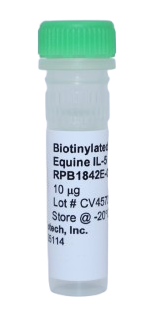
Equine IL-5 Biotinylated Recombinant Protein
- Catalog Number:
- RPB1842E
- Availability:
- In stock
- Application:
- Cell Culture
- 100% Homology:
- Equus caballus (horse)
- Label:
- Biotin
 Powered by Bioz
 - The Equine IL-5 Biotinylated yeast-derived recombinant protein is not tagged and is naturally endotoxin-free. The purity is greater than 98% as visualized by SDS-PAGE analysis. Equine IL-5 Biotinylated applications are for cell culture. Equine IL-5 Biotinylated yeast-derived recombinant protein can be purchased in multiple sizes. Equine IL-5 Biotinylated Specifications: (Molecular Weight: 12.9 kDa) (Amino Acid Sequence: AVESPMNRLVAETLTLLSTHRTLLIGDGNLMIPTPEHKNHQLCIEEVFQGIDTLKNQTVQGDAVAKLFQNLSLIKGYIDLQKKKCGGERWRVKQFLDYLQEFLGVINTEWTIEG) (Gene ID: 100034199). For research use only.
| Amino Acid Sequence | AVESPMNRLV AETLTLLSTH RTLLIGDGNL MIPTPEHKNH QLCIEEVFQG IDTLKNQTVQ GDAVAKLFQN LSLIKGYIDL QKKKCGGERW RVKQFLDYLQ EFLGVINTEW TIEG (114) |
| Endotoxin | Naturally endotoxin-free |
| Form | Lyophilized |
| Storage Conditions | -20°C |
| Molecular Weight | 12.9kDa |
| Purity | >98% as visualized by SDS-PAGE analysis. |
| Expression System | Yeast |
| Form | Lyophilized |
| Country Of Origin | USA |
Equine Interleukin-5 (IL-5) is a Th2-associated cytokine produced primarily by activated CD4⁺ T helper 2 (Th2) cells, mast cells, and type 2 innate lymphoid cells in horses (Equus caballus), where it plays a central role in eosinophil differentiation, activation, recruitment, and survival. IL-5 is a member of the common beta chain (βc) cytokine family, which also includes IL-3 and granulocyte–macrophage colony-stimulating factor (GM-CSF); these cytokines share the βc receptor subunit and regulate hematopoiesis and myeloid cell function. IL-5 signals through a receptor complex composed of IL-5Rα and the shared βc chain, activating JAK/STAT and MAPK pathways that promote eosinophil maturation in the bone marrow and enhance their effector activity in peripheral tissues. In equine health, IL-5 is particularly relevant in eosinophil-associated conditions such as equine asthma (recurrent airway obstruction), insect bite hypersensitivity (“sweet itch”), parasitic infections, and certain gastrointestinal inflammatory disorders, where elevated IL-5 contributes to eosinophilic infiltration, airway inflammation, pruritic dermatitis, and tissue remodeling. While IL-5–mediated responses support protective immunity against helminths, excessive or chronic IL-5 signaling can drive persistent allergic inflammation and fibrosis. As a biomarker of type 2 immune activation and eosinophilic disease, equine IL-5 is important in allergy research, vaccine response studies, and immune modulation strategies. In translational research, horses serve as valuable large-animal models for human asthma and allergic airway disease, and characterization of equine IL-5 supports comparative investigations into βc cytokine signaling and development of targeted anti–IL-5 therapies relevant to both veterinary and human medicine.
Citations
10 ug
Price: $200.00