Slide 1 of 1 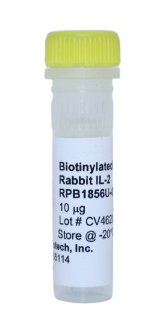
Rabbit IL-2 Biotinylated Recombinant Protein
- Catalog Number:
- RPB1856U
- Availability:
- In stock
- Application:
- Cell Culture
- 100% Homology:
- Oryctolagus cuniculus (rabbit)
- Label:
- Biotin
 Powered by Bioz
 - The Rabbit IL-2 Biotinylated yeast-derived recombinant protein is not tagged and is naturally endotoxin-free. The purity is greater than 98% as visualized by SDS-PAGE analysis. Rabbit IL-2 Biotinylated applications are for cell culture. Rabbit IL-2 Biotinylated yeast-derived recombinant protein can be purchased in multiple sizes. Rabbit IL-2 Biotinylated Specifications: (Molecular Weight: 15.1 kDa) (Amino Acid Sequence: APTSSSTKETQEQLDQLLLDLQVLLKGVNDYKNSKLSRMLTFKFYMPKKVTELKHLQCLEEELKPLEEVLNLAQGKNSHGGNTRESISNINVTVLKLKGSETFMCEYDETVTIVEFLNRWITFCQSIISASSS (133)) (Gene ID: 100302458). For research use only.
| Amino Acid Sequence | APTSSSTKET QEQLDQLLLD LQVLLKGVND YKNSKLSRML TFKFYMPKKV TELKHLQCLE EELKPLEEVL NLAQGKNSHG GNTRESISNI NVTVLKLKGS ETFMCEYDET VTIVEFLNRW ITFCQSIISA SSS (133) |
| Endotoxin | Naturally endotoxin-free |
| Form | Lyophilized |
| Storage Conditions | -20°C |
| Purity | >98% as visualized by SDS-PAGE analysis. |
| Expression System | Yeast |
| Form | Lyophilized |
| Country Of Origin | USA |
Rabbit IL-2 (Interleukin-2) is a central T cell–derived cytokine that regulates lymphocyte proliferation, differentiation, and immune homeostasis in rabbits (Oryctolagus cuniculus). IL-2 is produced primarily by activated CD4⁺ and CD8⁺ T lymphocytes following antigen recognition and costimulatory signaling, and it functions through the IL-2 receptor complex (IL-2Rα/CD25, IL-2Rβ/CD122, and the common γ chain/CD132) to promote clonal expansion of antigen-specific T cells, enhance cytotoxic T lymphocyte and natural killer (NK) cell activity, and support development and maintenance of regulatory T cells (Tregs). In healthy rabbits, basal IL-2 expression is generally low but increases during infection, vaccination, and immune stimulation. Altered IL-2 responses have been observed in models of tuberculosis, atherosclerosis, ocular inflammation, autoimmune-like disease, and tumor immunology. Rabbits serve as valuable translational models for cardiovascular disease, infectious disease, and immunogenicity studies. In biomedical research, rabbit IL-2 is widely used as a biomarker of T cell activation and cell-mediated immunity and supports investigation of vaccine efficacy, immune regulation, and immunotherapeutic strategies.
Citations
10 ug
Price: $200.00