Slide 1 of 1 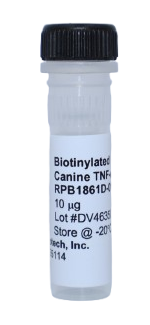
Canine TNF alpha Biotinylated Recombinant Protein
- Catalog Number:
- RPB1861D
- Availability:
- In stock
- Application:
- Cell Culture
- 100% Homology:
- Canis lupus dingo (dingo), Canis lupus familiaris (dog), Nyctereutes procyonoides (raccoon dog)
- Label:
- Biotin
 Powered by Bioz
 - The Canine TNF alpha Biotinylated yeast-derived recombinant protein is not tagged and is naturally endotoxin-free. The purity is greater than 98% as visualized by SDS-PAGE analysis. Canine TNF alpha Biotinylated applications are for cell culture. Canine TNF alpha Biotinylated yeast-derived recombinant protein can be purchased in multiple sizes. Canine TNF alpha Biotinylated Specifications: (Molecular Weight: 17.3 kDa) (Amino Acid Sequence: VKSSSRTPSD KPVAHVVANP EAEGQLQWLS RRANALLANG VELTDNQLIV PSDGLYLIYS QVLFKGQGCP STHVLLTHTI SRFAVSYQTK VNLLSAIKSP CQRETPEGTE AKPWYEPIYL GGVFQLEKGD RLSAEINLPN YLDFAESGQV YFGIIAL (157)) (Gene ID: 403922). For research use only.
| Amino Acid Sequence | VKSSSRTPSD KPVAHVVANP EAEGQLQWLS RRANALLANG VELTDNQLIV PSDGLYLIYS QVLFKGQGCP STHVLLTHTI SRFAVSYQTK VNLLSAIKSP CQRETPEGTE AKPWYEPIYL GGVFQLEKGD RLSAEINLPN YLDFAESGQV YFGIIAL (157) |
| Endotoxin | Naturally endotoxin-free |
| Form | Lyophilized |
| Storage Conditions | -20°C |
| Purity | >98% as visualized by SDS-PAGE analysis. |
| Expression System | Yeast |
| Form | Lyophilized |
| Country Of Origin | USA |
Canine Tumor Necrosis Factor Alpha (TNF-α) (also known as TNF or cachectin) is a proinflammatory cytokine that plays a central role in innate immune responses, inflammation, and host defense against pathogens in dogs (Canis lupus familiaris). TNF-α is a member of the tumor necrosis factor (TNF) superfamily, which includes related cytokines such as TNF-β (lymphotoxin-α), Fas ligand (FasL), CD40 ligand (CD40L), and TRAIL, proteins that regulate immune signaling, apoptosis, and inflammatory pathways. In dogs, TNF-α is primarily produced by activated macrophages, monocytes, dendritic cells, and T lymphocytes in response to infection, tissue injury, or inflammatory stimuli. TNF-α exerts its biological effects by binding to TNF receptors TNFR1 (p55) and TNFR2 (p75), activating intracellular signaling pathways including NF-κB, MAPK, and caspase-mediated pathways, which regulate cytokine production, immune cell activation, apoptosis, and inflammatory responses. In canine health, TNF-α is involved in immune responses to bacterial infections, viral diseases, and inflammatory conditions, including canine parvovirus infection, leishmaniasis, and chronic inflammatory disorders such as inflammatory bowel disease (IBD). Elevated TNF-α levels are also associated with sepsis, autoimmune diseases, and cancer-related inflammation, where dysregulated TNF signaling can contribute to tissue damage and disease progression. Because TNF-α is a key mediator of inflammation and immune regulation, canine TNF-α is widely studied in veterinary immunology, infectious disease research, and inflammatory disease models, contributing to improved understanding of immune responses and potential therapeutic strategies in dogs.
Citations
10 ug
Price: $200.00