Slide 1 of 1 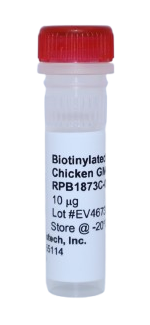
Chicken GM-CSF Biotinylated Recombinant Protein
- Catalog Number:
- RPB1873C
- Application:
- Cell Culture
- 100% Homology:
- Gallus gallus (chicken)
- Label:
- Biotin
 Powered by Bioz
 - The Chicken GM-CSF Biotinylated yeast-derived recombinant protein is not tagged and is naturally endotoxin-free. The purity is greater than 98% as visualized by SDS-PAGE analysis. Chicken GM-CSF Biotinylated applications are for cell culture. Chicken GM-CSF Biotinylated yeast-derived recombinant protein can be purchased in multiple sizes. Chicken GM-CSF Biotinylated Specifications: (Molecular Weight: 14.2 kDa) (Amino Acid Sequence: TTTYSCCYKV YTILEEITSH LESTAATAGL SSVPMDIRDK TCLRNNLKTF IESLKTNGTE EESGIVFQLN RVHECERLFS NITPTPQVPD KECRTAQVSR EKFKEALKTF FIYLSDVLPE EKDCI (125)) (Gene ID: 416325). For research use only.
| Amino Acid Sequence | TTTYSCCYKV YTILEEITSH LESTAATAGL SSVPMDIRDK TCLRNNLKTF IESLKTNGTE EESGIVFQLN RVHECERLFS NITPTPQVPD KECRTAQVSR EKFKEALKTF FIYLSDVLPE EKDCI (125) |
| Endotoxin | Naturally endotoxin-free |
| Form | Lyophilized |
| Storage Conditions | -20°C |
| Purity | >98% as visualized by SDS-PAGE analysis. |
| Affinity Tag | None |
| aminoAcids | 125 |
| Carrier Protein | None |
| Expression System | Yeast |
| Form | Lyophilized |
| Country Of Origin | USA |
Chicken GM-CSF (Granulocyte–Macrophage Colony-Stimulating Factor, CSF2) is a hematopoietic cytokine belonging to the colony-stimulating factor family, which also includes G-CSF (CSF3) and M-CSF (CSF1) that regulate the development, proliferation, and activation of myeloid immune cells. In chickens (Gallus gallus), GM-CSF is produced by activated T lymphocytes, macrophages, fibroblasts, and other stromal cells in response to infection, inflammatory cytokines, or immune stimulation. Chicken GM-CSF binds to the GM-CSF receptor (CSF2R) expressed on hematopoietic progenitor cells and mature myeloid cells, activating intracellular signaling pathways such as JAK/STAT, MAPK/ERK, and PI3K–AKT, which promote the proliferation and differentiation of myeloid lineage cells, including macrophages and heterophils, the avian functional equivalents of neutrophils. In poultry immunity, GM-CSF plays an important role in regulating innate immune responses and antigen-presenting cell function, particularly during bacterial and viral infections. Chickens are widely used as animal models for studying host–pathogen interactions and mucosal immunity, and GM-CSF–regulated myeloid responses have been examined in chicken models of Salmonella enterica infection, where enhanced macrophage and heterophil activity contributes to control of intestinal colonization and systemic spread of the pathogen, providing insights relevant to poultry disease control and food safety research.
- Colony Stimulating Factor
Citations
10 ug
Price: $200.00