Slide 1 of 1 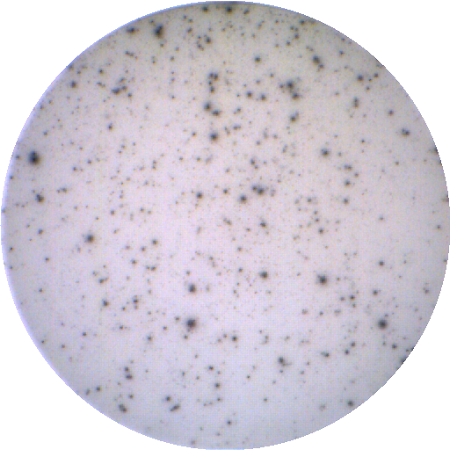
Rabbit CCL21 ELISpot
- Catalog Number:
- SPOT2504U
- Availability:
- In stock
- Application:
- ELISpot
- 100% Homology:
- Oryctolagus cuniculus (rabbit)
 Powered by Bioz
 Components
| Usage | Quantity | Component | |
|---|---|---|---|
| Capture Antibody | 100 µg | KP1119U-100 | |
| Detection Antibody | 50 µg X 2 | KPB1120U-050 | |
| Standard Control | 5 µg | RP0976U-005 |
- The Rabbit CCL21 ELISpot assay is designed to evaluate CCL21-secreting cells by sensitively detecting and quantifying low-frequency chemokine-producing cells at the single-cell level. CCL21 is a chemokine that plays a key role in directing the migration and homing of T cells and dendritic cells through interaction with the CCR7 receptor, supporting lymphocyte trafficking and organization of immune responses within secondary lymphoid tissues. In rabbits, CCL21 contributes to immune cell recruitment and regulation of adaptive immune responses during infection, inflammation, and tissue injury. Measurement of CCL21 is particularly important in rabbit research because rabbits are widely used models for immunology, infectious disease, and vaccine studies, where understanding lymphocyte migration and immune cell positioning is critical for characterizing immune responses. This assay enables researchers to quantify CCL21-producing cells to better understand chemokine-mediated immune cell trafficking and immune system organization. The Rabbit CCL21 ELISpot kit contains a Capture Antibody, Detection Antibody, and Standard Control sufficient for the development of up to two (2) ELISpot assays. The included antibodies have been validated for performance in an ELISpot assay using the provided Standard Control. Additional materials and reagents required to complete the assay are not included. Individual components may also be purchased separately. Made in the USA. For research use only.
| Storage Conditions | 2°C to 8°C |
| Country Of Origin | USA |
Rabbit CCL21 (C-C motif chemokine ligand 21, also known as secondary lymphoid-tissue chemokine, SLC, or 6Ckine) is a homeostatic chemokine that regulates lymphocyte trafficking and organization of adaptive immune responses in rabbits (Oryctolagus cuniculus). CCL21 primarily signals through the CCR7 receptor, directing the migration of naïve T cells, central memory T cells, and mature dendritic cells to secondary lymphoid tissues such as lymph nodes and spleen. In rabbits, CCL21 is produced mainly by stromal cells and endothelial cells within lymphoid organs, where it establishes chemokine gradients that guide immune cells into T-cell zones and facilitate interactions between dendritic cells and lymphocytes required for activation of adaptive immunity. In rabbit health and research, CCL21-mediated CCR7 signaling is important for immune surveillance and lymphoid tissue organization, and it is studied in models of infectious disease, inflammatory responses, and tumor immunology. Because rabbits are commonly used as translational models for immunology, vaccine development, and inflammatory disease, characterization of rabbit CCL21 supports studies of lymphoid architecture, immune cell migration, and adaptive immune responses relevant to both veterinary and human health.
Citations
1 Set
Price: $1,200.00
RELATED MEDIA
