Slide 1 of 1 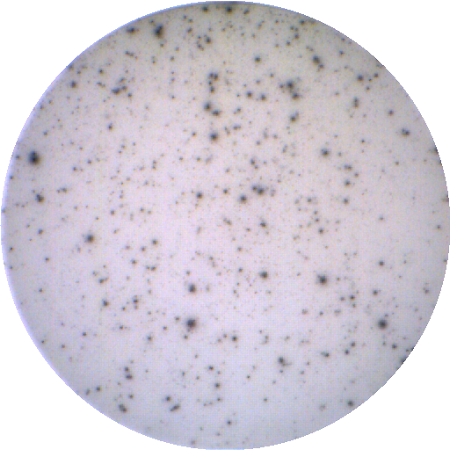
Swine CCL11 (Eotaxin-1) ELISpot
- Catalog Number:
- SPOT2531S
- Availability:
- In stock
- Application:
- ELISpot
- 100% Homology:
- Sus scrofa (pig)
 Powered by Bioz
 Components
| Usage | Quantity | Component | |
|---|---|---|---|
| Capture Antibody | 100 µg | KP1374S-100 | |
| Detection Antibody | 50 µg X 2 | KPB1375S-050 | |
| Standard Control | 5 µg | RP1087S-005 |
- The Swine CCL11 ELISpot assay is designed to evaluate CCL11-secreting cells by sensitively detecting and quantifying low-frequency chemokine-producing cells at the single-cell level. CCL11, also known as eotaxin-1, is a chemokine that plays a key role in the recruitment and activation of eosinophils through interaction with the CCR3 receptor and contributes to regulation of allergic inflammation and type 2 immune responses in pigs. In swine, CCL11 is associated with eosinophil-driven inflammatory responses and is particularly relevant in studies of respiratory disease, parasitic infections, and mucosal immunity. Measurement of CCL11 is important in swine research for understanding immune responses in models of airway inflammation, gastrointestinal parasitism, and host-pathogen interactions in agricultural and biomedical studies. This assay enables researchers to quantify CCL11-producing cells to better understand chemokine-mediated immune cell recruitment and inflammatory responses in pigs. The Swine CCL11 ELISpot kit contains a Capture Antibody, Detection Antibody, and Standard Control sufficient for the development of up to two (2) ELISpot assays. The included antibodies have been validated for performance in an ELISpot assay using the provided Standard Control. Additional materials and reagents required to complete the assay are not included. Individual components may also be purchased separately. Made in the USA. For research use only.
| Storage Conditions | 2°C to 8°C |
| Country Of Origin | USA |
Swine CCL11 (C-C motif chemokine ligand 11), also known as eotaxin-1, is a member of the CC chemokine family that regulates eosinophil recruitment and type 2–associated immune responses in pigs (Sus scrofa). CCL11 is produced primarily by epithelial cells, fibroblasts, endothelial cells, smooth muscle cells, and activated immune cells in response to Th2-associated cytokines such as IL-4 and IL-13, as well as inflammatory stimuli. It functions predominantly through the CCR3 receptor to promote chemotaxis and activation of eosinophils, and can also influence basophils and certain Th2 lymphocytes. In healthy swine, basal CCL11 expression is generally low, but levels may increase during parasitic infections—particularly helminth infections affecting the gastrointestinal or respiratory tract—as well as during allergic-type inflammation and mucosal immune activation. In veterinary and translational research, swine CCL11 is of interest in studies of parasite immunity, airway inflammation, gut barrier function, and Th2-biased immune responses, particularly given the physiological similarities between pigs and humans. Characterizing CCL11 expression in swine provides valuable insight into eosinophil biology, chemokine-mediated leukocyte trafficking, and regulation of type 2 inflammatory responses in both agricultural and biomedical research settings.
Citations
1 Set
Price: $1,200.00
RELATED MEDIA
