Slide 1 of 1 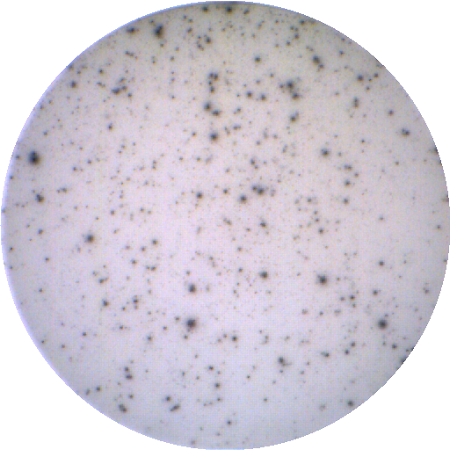
Zebrafish CCL3 (MIP-1 alpha) ELISpot
- Catalog Number:
- SPOT2563Z
- Availability:
- In stock
- Application:
- ELISpot
- 100% Homology:
- Danio rerio (zebrafish)
 Powered by Bioz
 Components
| Usage | Quantity | Component | |
|---|---|---|---|
| Capture Antibody | 100 µg | KP1948Z-100 | |
| Detection Antibody | 50 µg X 2 | KPB1949Z-050 | |
| Standard Control | 5 µg | RP1550Z-005 |
- The Zebrafish CCL3 ELISpot assay is designed to evaluate CCL3-secreting cells by sensitively detecting and quantifying low-frequency chemokine-producing cells at the single-cell level. CCL3, also known as macrophage inflammatory protein-1 alpha (MIP-1α), is a chemokine that plays an important role in recruiting and activating immune cells such as macrophages, neutrophils, and lymphocytes to sites of infection and inflammation. In zebrafish, CCL3 contributes to regulation of innate immune responses and inflammatory signaling that coordinate leukocyte migration during infection, tissue injury, and immune challenge. Measurement of CCL3 is particularly important in zebrafish research because zebrafish are widely used as models for studying innate immunity, host-pathogen interactions, inflammation, and immune cell migration due to their conserved immune pathways and transparent developmental stages. This assay enables researchers to quantify CCL3-producing cells to better understand chemokine-mediated immune cell recruitment and inflammatory responses in zebrafish. The Zebrafish CCL3 ELISpot kit contains a Capture Antibody, Detection Antibody, and Standard Control sufficient for the development of up to two (2) ELISpot assays. The included antibodies have been validated for performance in an ELISpot assay using the provided Standard Control. Additional materials and reagents required to complete the assay are not included. Individual components may also be purchased separately. Made in the USA. For research use only.
| Storage Conditions | 2°C to 8°C |
| Country Of Origin | USA |
Zebrafish (Danio rerio) CCL3 (C-C motif chemokine ligand 3, also referred to as an MIP-1α–like chemokine in teleost fish) is a pro-inflammatory chemokine involved in recruitment and activation of immune cells during innate immune responses. Similar to mammalian CCL3, zebrafish CCL3-like chemokines function to attract macrophages, neutrophils, and other leukocytes to sites of infection, tissue injury, or inflammatory stimulation through chemokine receptor pathways related to CCR1/CCR5-like receptors in fish. In zebrafish, CCL3 expression is induced in macrophages, epithelial cells, and other immune-responsive tissues following exposure to pathogens, inflammatory cytokines, or tissue damage. The chemokine plays an important role in early innate immune responses, particularly during bacterial infections such as Mycobacterium marinum and other experimental infection models where macrophage recruitment and granuloma formation are key components of host defense. Because zebrafish larvae are transparent and genetically tractable, CCL3-mediated leukocyte recruitment can be visualized in real time using fluorescent reporter lines, making zebrafish a powerful model for studying chemokine-driven immune cell migration. Characterization of zebrafish CCL3-like signaling contributes to understanding of evolutionarily conserved chemokine networks, innate immune cell trafficking, and host–pathogen interactions, providing insights relevant to vertebrate immunology and inflammatory disease mechanisms.
Citations
1 Set
Price: $1,200.00
RELATED MEDIA
